A temple entrance has its own weather.
Even on a calm day, the air near the doorway feels different, cooler, heavier, like the building is holding its breath. And if you arrive late enough, when the sun is dropping and the shadows start stretching across the floor, the guardians at the gate look less like statues and more like a warning you can touch.
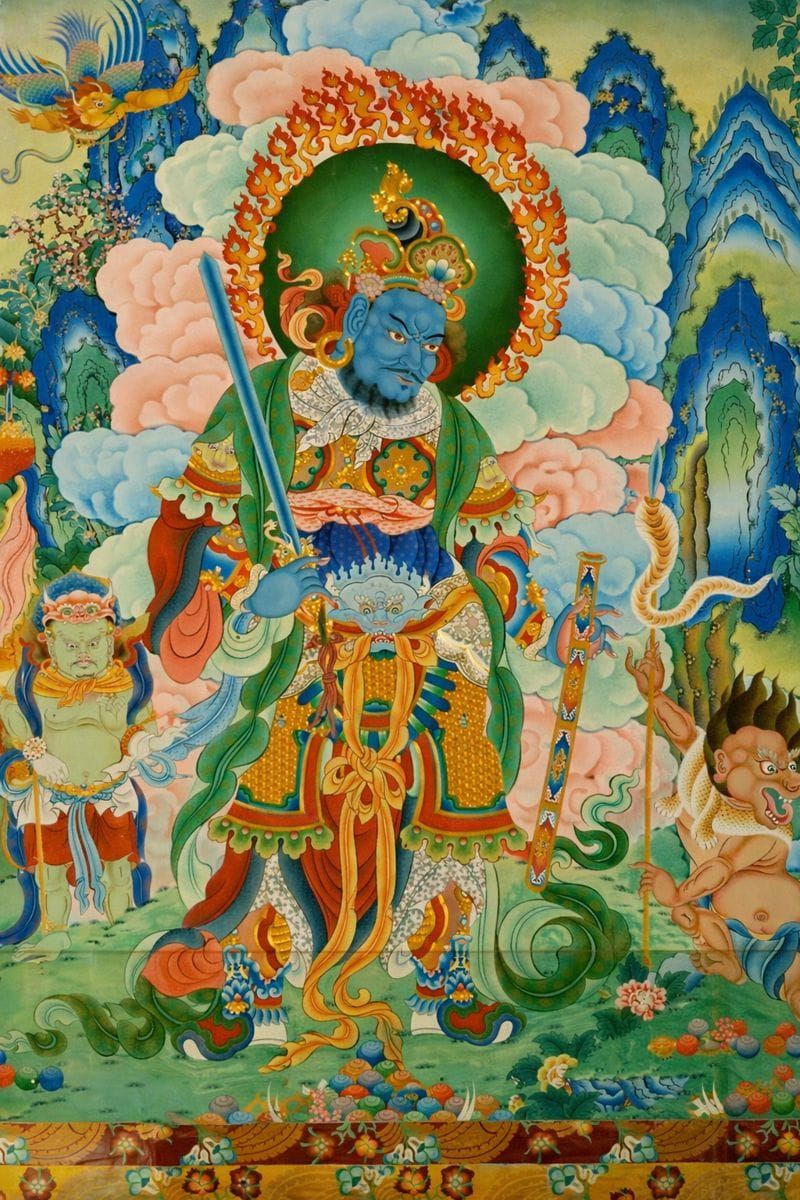
That’s where Virūpākṣa lives in the imagination: the western edge, the sunset side, the place where outlines blur.
If you’re new to this Four Heavenly Kings series, start with the two already posted:
Now we head west.
Don’t worry about pronouncing the names. The real point is what they do.
Rolo’s Note: Mount Meru and its “four-direction” guardians are not asking you to pull out a compass. Think of it as an old moral map. Every direction comes with a lesson, and every gate comes with a test.
The West Gate Problem: Shadows Lie
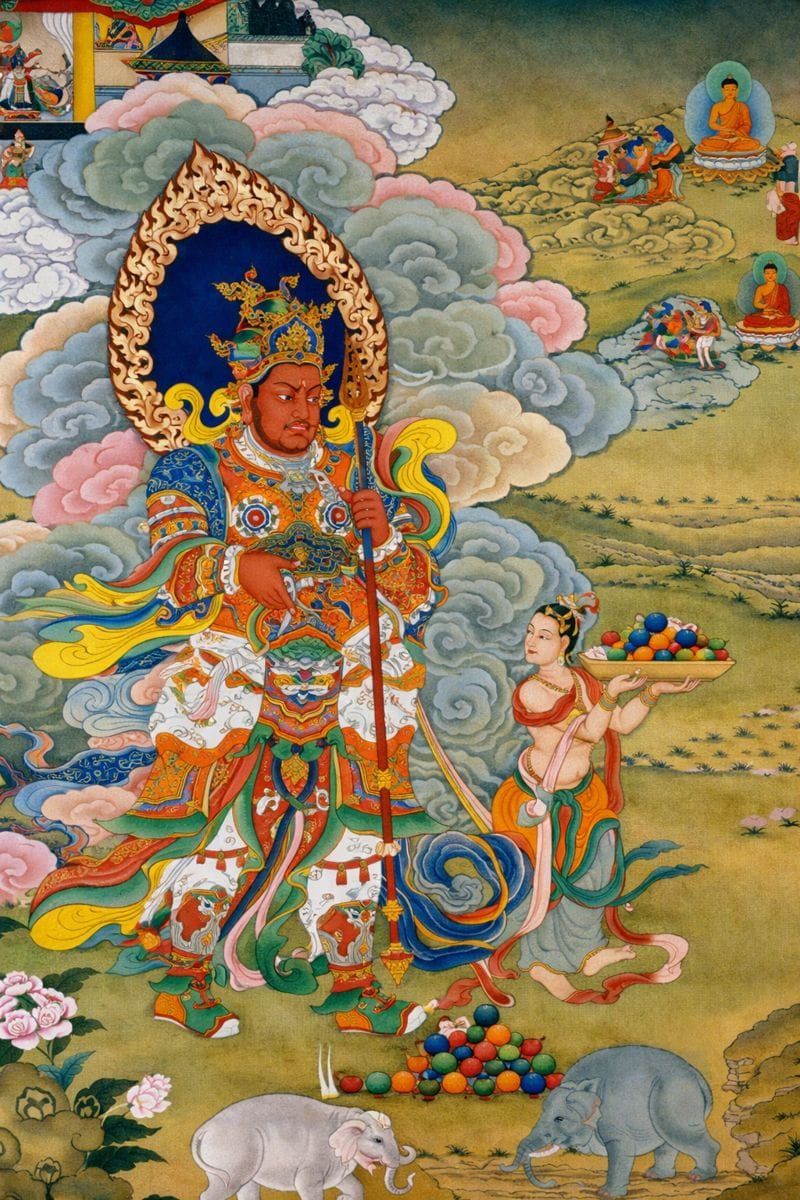
Dhṛtarāṣṭra in the East carries a strange balance, warrior posture with a musician’s soul. His whole vibe is sunrise: harmony, vigilance, beginnings.
Virūpākṣa feels like the opposite hour.
The west is where the day runs out.
And when the light runs out, people start filling in the gaps with whatever they want to see. That’s a poetic observation, and it’s basically the human operating system. In dim light, we guess. We misread. We convince ourselves.
So the West King’s job goes beyond “fight monsters.” It leans toward something sneakier:
keep the world from being fooled.
“Wide-Eyed” Isn’t a Compliment. It’s a Job Description.
Virūpākṣa is often explained as the “Wide-Eyed” one.
Wide-eyed in the sense that nothing gets past him.
If Dhṛtarāṣṭra keeps order through harmony, Virūpākṣa keeps order through vision, the kind that notices what you’re trying to hide and what you’re hiding from yourself.
That’s why he fits the West so well. Sunset is when you learn what you actually built during the day.
The Serpent Connection
In Buddhist cosmology, Virūpākṣa is tied to the nāgas, serpent beings who do not live up in the clouds where everything is clean and bright. They belong to hidden places: underground realms, lakes, the “below.”
If you remember how the Vaiśravaṇa post teased that we’d eventually circle back to serpents, this is one of the reasons.
Nāgas sit in an uncomfortable spot in myth.
They can be protective. They can be dangerous. They can be wise. They can be vindictive.
In other words, they’re not “cartoon villains.” They’re closer to the way nature behaves: beautiful, powerful, and not interested in your comfort.
And Virūpākṣa, as their king, ends up guarding more than a direction.
He guards the boundary between what’s seen and what’s hidden.
Why He Looks Different Depending on Where You Meet Him
One thing you learn fast with these kings: they travel well.
The core idea stays the same, and the props change.
In some traditions, Virūpākṣa shows up with symbols that feel straight out of a military parade, like a victory banner.
In others, he carries something that feels almost… bureaucratic.
A brush. A scroll.
That version (especially common in Japan, where he’s known as Komokuten) presents him as an investigator, a cosmic record-keeper.
The kind of guardian who fights threats and records them.
And that actually makes perfect sense.
Because the West King is tied to accuracy as much as force.
- The banner says: clarity wins.
- The scroll says: your actions leave a trace.
- The brush says: someone is taking notes, whether you like it or not.
Different cultures gave him different tools, and they were all trying to describe the same function: the West King sees what others miss.
What Virūpākṣa Guards in Plain Language
Most of us will never wrestle a demon at a temple doorway (and if you do, please write in).
But Virūpākṣa’s symbolism still lands because his “enemies” are familiar:
- confusion that feels harmless until it grows teeth,
- self-deception that starts as a small excuse,
- the way a rumor spreads faster than truth,
- the way we mistake shadows for facts when we’re tired.
So if you’ve ever felt your mind get slippery near the end of the day, when your patience is gone and your certainty starts making things up, then you already understand why the West King exists.
He’s the reminder that discernment is a form of protection.
Sometimes the most dangerous thing in the room is the story you’re telling yourself.
Where This Leaves Us
We’ve now covered three directions:
- The North King (Vaiśravaṇa), whose story shows how cultures remix their gods.
- The East King (Dhṛtarāṣṭra), a guardian who protects with both discipline and harmony.
- And now the West King (Virūpākṣa), whose power is vision, clear, unblinking, and uninterested in comforting lies.
One remains.
When you’re ready, head to the last corner of the compass:
Virūḍhaka - Protector of the South