
The missing solar neutrinos were missing from particular measurements. That qualification eventually helped solve the problem.
Nuclear reactions in the Sun produce electron-neutrinos, particles that interact so weakly with matter that most pass through enormous thicknesses of it without leaving a detectable trace. Experiments on Earth had found fewer than solar calculations predicted. Perhaps the calculations overstated how many the Sun produced. Perhaps something happened to the particles between production and detection.
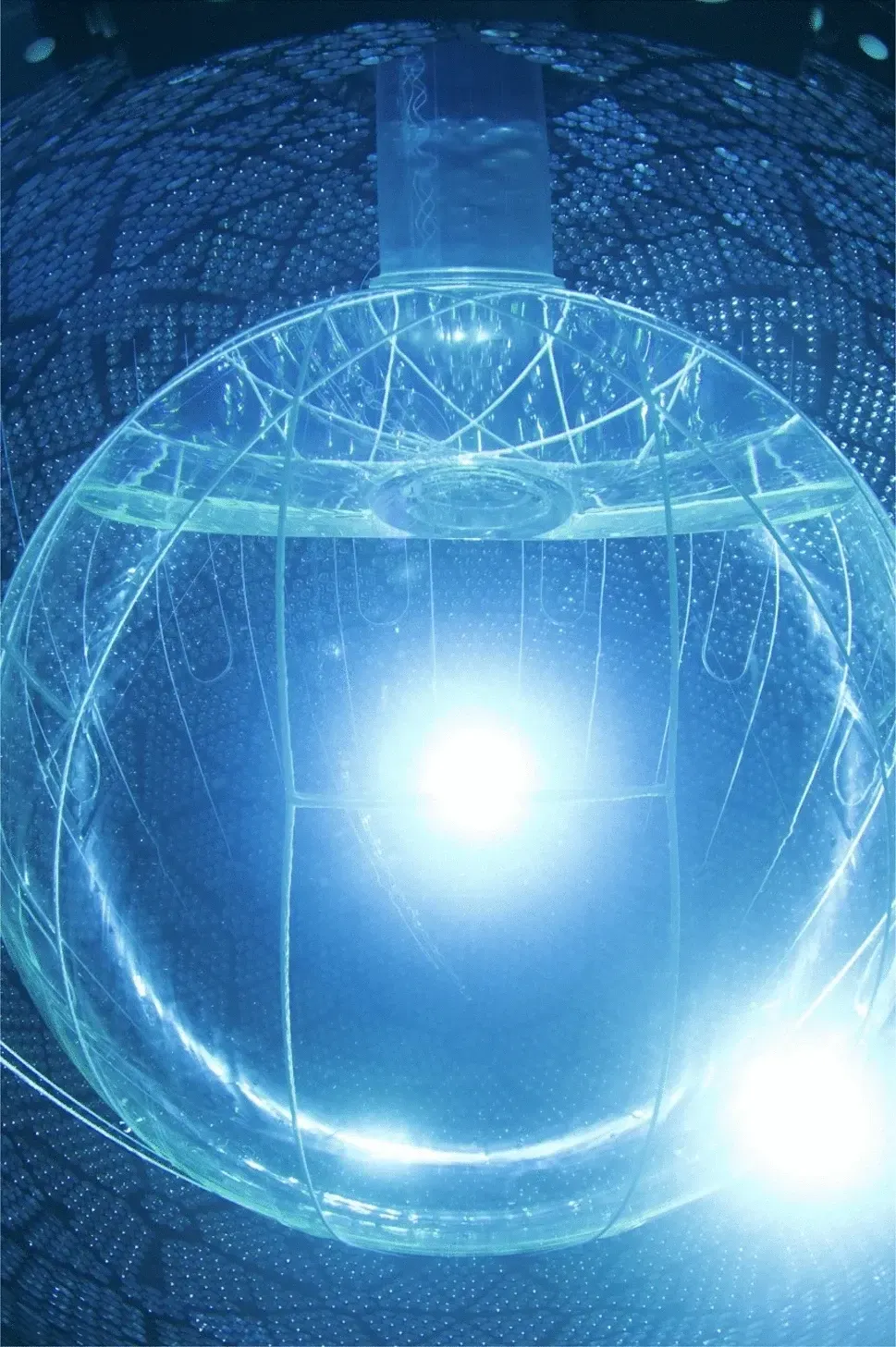
The second possibility required an instrument that could ask more than one question about the arriving neutrinos. The Sudbury Neutrino Observatory, or SNO, used a thousand tonnes of heavy water beneath about two kilometres of rock in Ontario. Its central comparison was between the electron-neutrino component and the total of the three known active flavours. If the Sun sent electron-neutrinos but other flavours arrived, reducing the predicted solar output would not explain that difference.
Two questions in the same water
Flavour names distinguish electron-neutrinos, muon-neutrinos and tau-neutrinos. They refer to relationships with the corresponding charged particles, not colours that a detector can photograph. A solar electron-neutrino can be detected as a different flavour after travelling from the Sun.
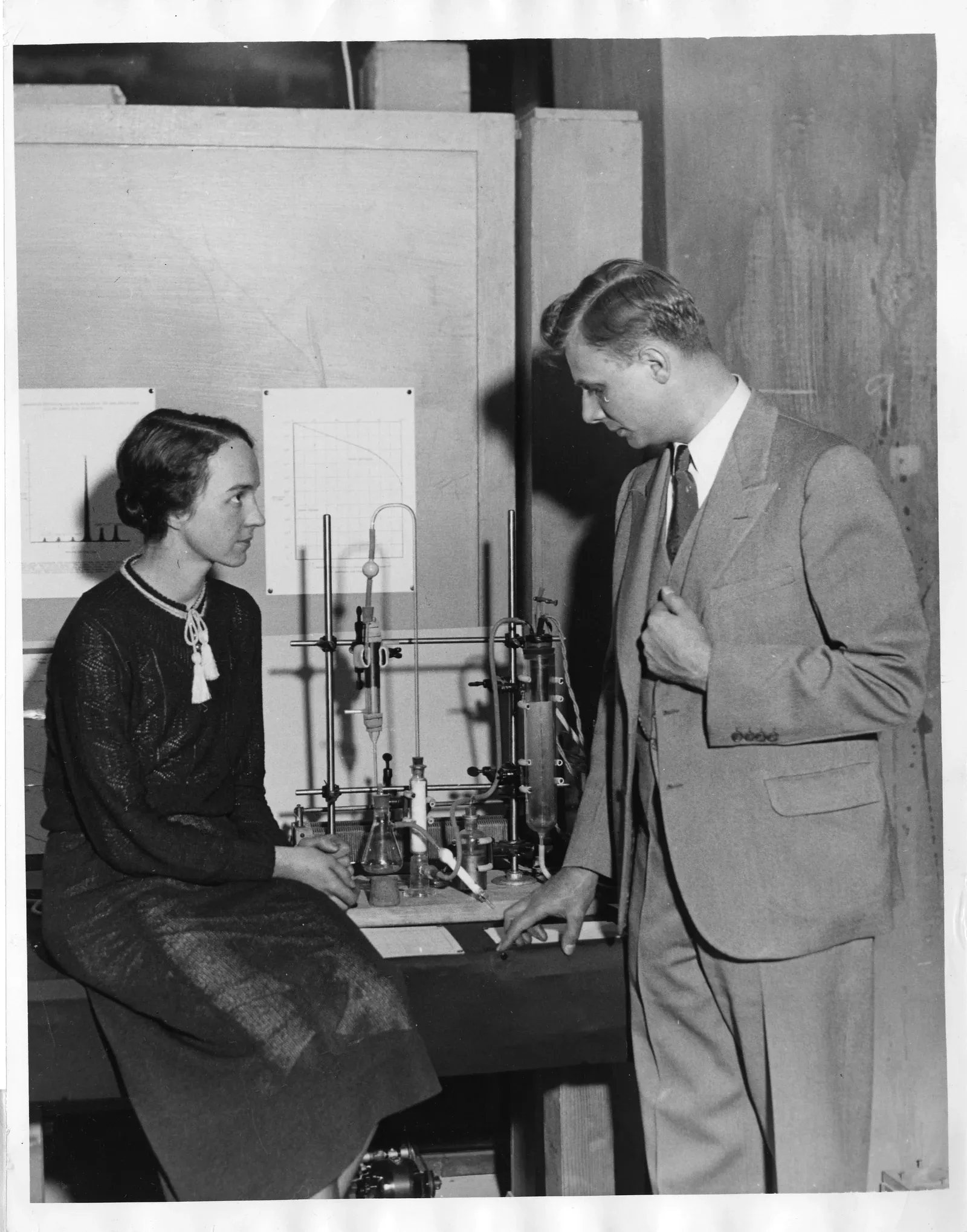
Ordinary hydrogen has a single proton in its nucleus. In heavy water, the hydrogen is deuterium, whose nucleus contains a proton and a neutron. That paired nucleus gives neutrinos useful ways to interact. The choice of liquid determines which questions the experiment can ask.
One reaction, called charged current, responds to electron-neutrinos. An interaction breaks the deuterium nucleus into two protons and produces an energetic electron. The electron can make Cherenkov light as it travels faster than light propagates through the water. It does not exceed the speed of light in a vacuum.
Another reaction, called neutral current, can be triggered by any of the three active flavours. It separates the proton and neutron while the neutrino continues. The neutron can later be captured, releasing radiation that produces detectable light through further interactions. In SNO's first phase, capture occurred on deuterium in the heavy water. The collaboration's detector review explains the chain from an invisible incoming particle to the light recorded by the apparatus.
Charged current supplied an electron-sensitive measurement. Neutral current supplied a measurement of the active-flavour total, without separating muon-neutrinos from tau-neutrinos. Their different sensitivities made the comparison possible. Simply building a larger detector with the same sensitivity as an earlier experiment would not have supplied that distinction.
What the apparatus actually saw
SNO's water sat inside a transparent acrylic vessel surrounded by thousands of photomultiplier tubes. These instruments detected faint light and its timing. The experiment did not catch every neutrino crossing the vessel or watch an individual neutrino transform en route.
The rock above the detector shielded it from cosmic rays that would otherwise complicate such a rare-event measurement. Depth did not eliminate every unwanted signal. Traces of radioactive elements in and around the detector could produce light or free neutrons, including neutrons released when radiation broke apart deuterium. Those would contaminate the channel used to infer the total active-flavour flux.
Researchers measured contamination through water assays and signals inside the detector, calibrated its response, and modelled how different processes contributed to the distributions of light. Event energy, position and direction relative to the Sun helped separate the components. The original neutral-current paper describes this work alongside the result. A useful reaction was not enough without a measured account of what could imitate it.
The comparison changed
In 2001, SNO measured the electron-sensitive charged-current reaction and compared its result with Super-Kamiokande's precise electron-scattering measurement in Japan. Scattering responds most strongly to electron-neutrinos but also, less strongly, to the other active flavours. The difference between the two experiments indicated a non-electron component. That 2001 result was already evidence for flavour transformation.

The result did not count all solar neutrinos across all energies. SNO's thresholds made the experiment chiefly sensitive to the high-energy neutrinos associated with boron-8 decay. The comparison therefore concerned these high-energy neutrinos, rather than every neutrino the Sun emits.
The neutral-current result announced in April 2002 brought the comparison inside SNO. The experiment could measure the electron component and the total through different reactions in the same apparatus. In the analysis assuming the standard shape of the boron-8 neutrino energy spectrum, the inferred electron flux was about 1.76 million particles per square centimetre per second. The total active-flavour flux was about 5.09 million in the same units.
These figures describe the incoming flux inferred from the experiment. They are not millions of particles caught in the vessel each second. Reaction probabilities and detection efficiencies differ, so a raw count of one class of events cannot simply be set beside another as if the two channels were equally efficient counters. The published estimates include statistical and systematic uncertainties.
For the solar neutrinos measured in this analysis, the electron component was roughly a third of the total. The inferred non-electron component stood 5.3 standard deviations above zero under the stated analysis. The experiment's contemporary announcement emphasised that the new comparison used SNO data alone.
What remained in the calculation
Independence from the predicted solar total did not mean independence from every assumption. Extracting fluxes required knowledge of reaction probabilities, detector response and backgrounds. The quoted precise comparison also assumed a standard energy-spectrum shape. When the researchers relaxed that spectral condition, their total-flux estimate became less precise but remained consistent with the constrained value and the solar prediction.
Two conclusions could now be distinguished. The neutral-current total agreed with the solar calculation. Separately, the total exceeded the electron-neutrino component. The second comparison supported flavour change even without demanding that the solar model get its total prediction right.
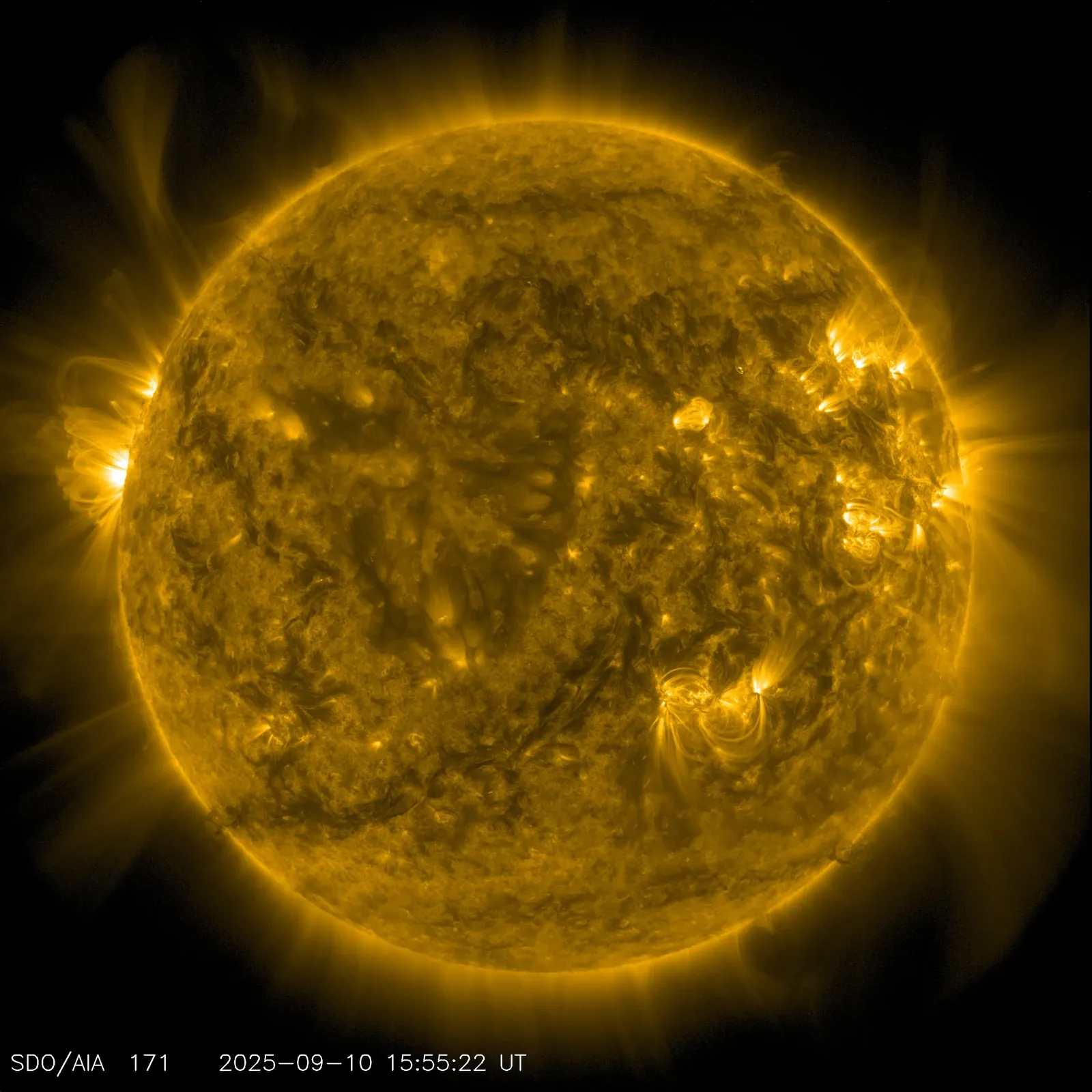
The Sun was being investigated through nuclear reaction products rather than the light used to infer what stars are made of. But these particles brought a complication of their own. Understanding the source required knowing what the journey could change and what the detector could recognise.
SNO did not determine an absolute neutrino mass, distinguish the arriving muon and tau components individually, or settle every question about solar physics. It did separate two explanations that a simple deficit could leave entangled. The electron-neutrinos were fewer at Earth, while the measured active-flavour total was not. Some of the neutrinos produced as electron-neutrinos had arrived as other active flavours.

_with_Ferdinand_G._Brickwedde_(1903-1989)_(3378199181).jpg?ref=theroloway.org)
.jpg?ref=theroloway.org)
