An error in a clock on Earth could make radio pulses from widely separated stars appear late. That would be a real measurement problem. It would not, by itself, be a gravitational wave.
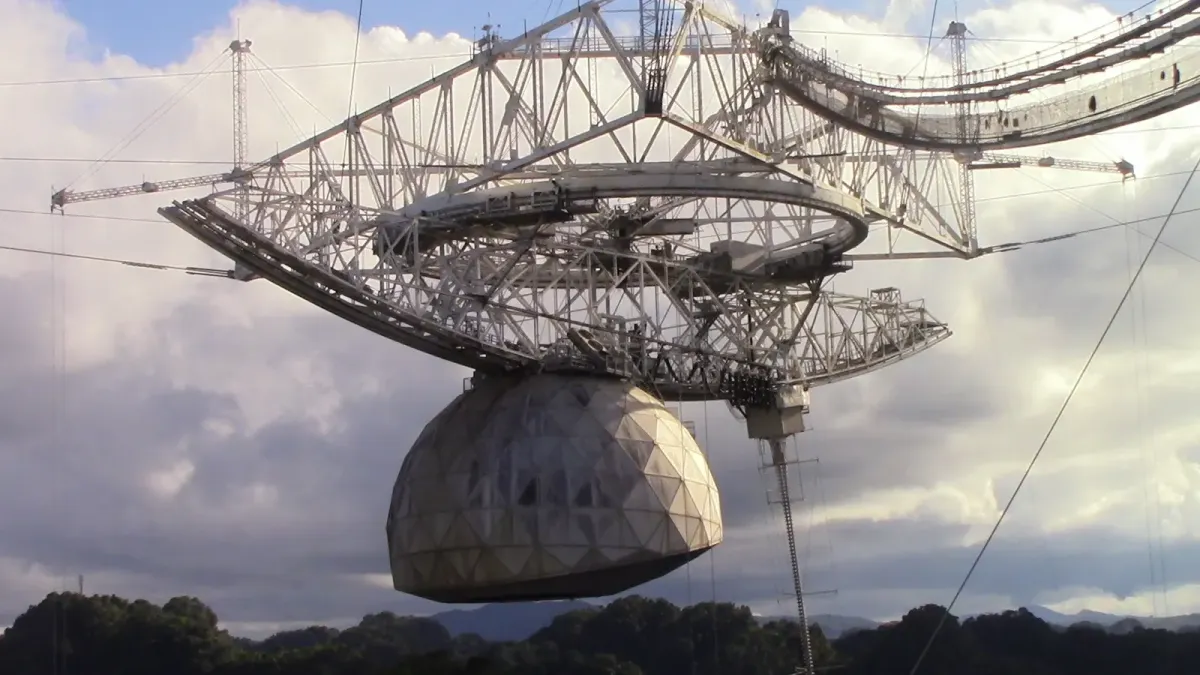
The North American Nanohertz Observatory for Gravitational Waves, or NANOGrav, uses the regular signals of pulsars to search for slow disturbances in spacetime. Its instruments receive radio waves. The gravitational waves are inferred from a pattern in their arrival times, and the pattern has to survive explanations closer to home.
What arrives at the telescope
A pulsar is a rotating neutron star whose beamed emission sweeps across our line of sight. Millisecond pulsars turn hundreds of times a second. Their repeated pulses allow astronomers to construct a prediction of when later signals should arrive.
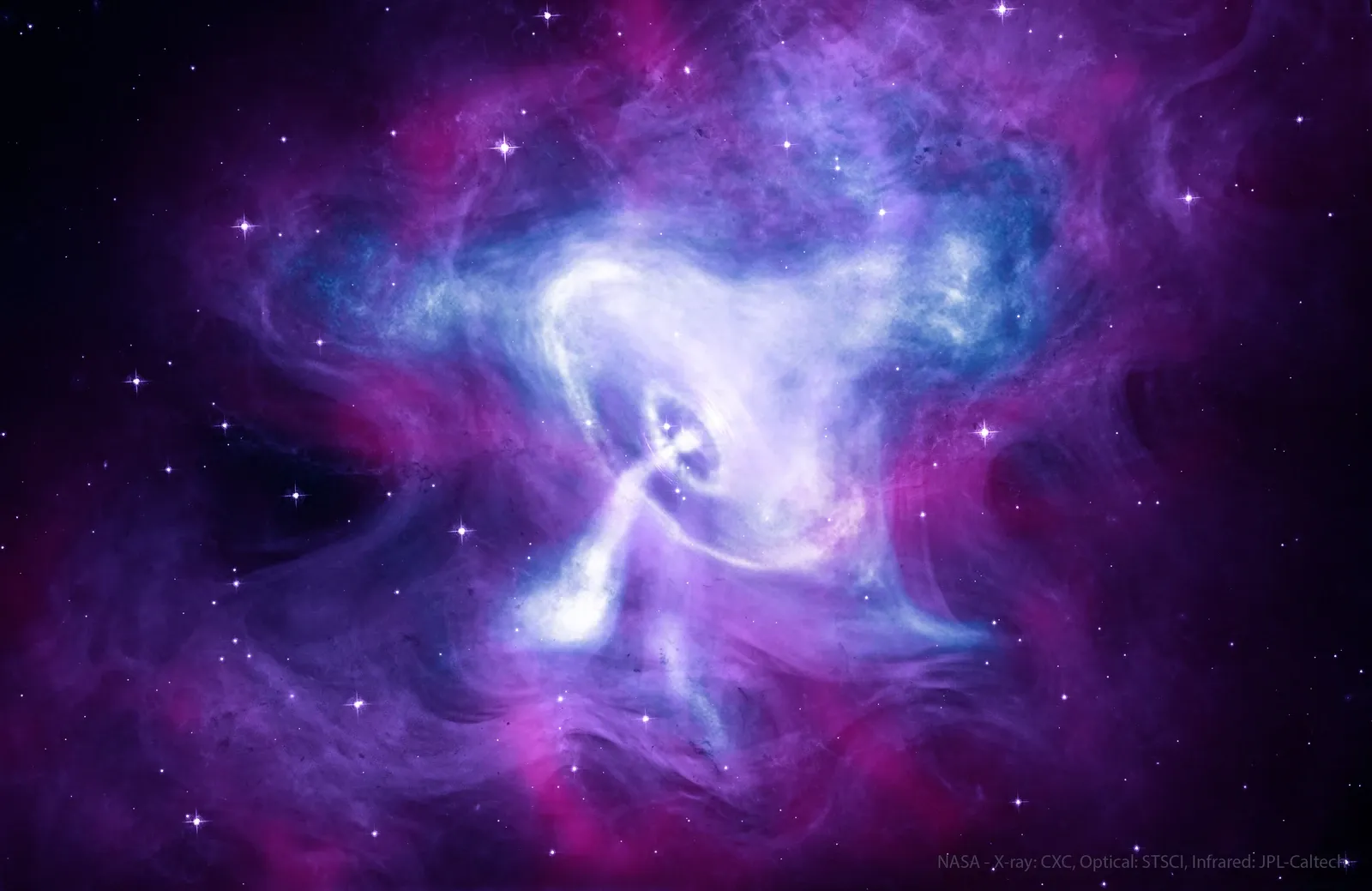
The prediction must account for the star's rotation, its movement, any relevant binary orbit and the journey through material between the stars. Earth's motion and the time kept by terrestrial clocks enter the measurement too. A pulse arriving later than predicted leaves a timing residual, the difference between observed and expected arrival time. Several physical processes can contribute to that difference. NANOGrav's explanation of pulsar timing describes how much has to be understood before these stars can serve as clocks.
Gravitational waves would stretch and compress spacetime, affecting the radio signals' travel between pulsar and Earth. The waves sought by this experiment vary slowly, over timescales that require years of observation. A brief departure from one pulsar's timing prediction cannot establish the background the collaboration is looking for.
That background is an unresolved signal to which many sources may contribute. A population of slowly orbiting supermassive black-hole binaries is a leading explanation. The task is first to identify gravitational-wave behaviour in the timing data, then to determine what produced it.
A shared problem is not yet the right pattern
The distinction was visible in NANOGrav's earlier 12.5-year dataset. The researchers found strong evidence for a slow process with similar spectral properties across pulsars. There was a common feature to explain. They did not find statistically significant evidence for the particular spatial correlations needed to attribute it to a gravitational-wave background in general relativity. Their 2020 paper kept those findings separate.

To see why, consider what a terrestrial clock error would do. The same reference clock enters observations of different stars, so its error can leave a shared timing disturbance across the array, whatever the separation between a pair of stars. An error in the calculated position of the Solar System's centre of mass creates another angular pattern, because the correction projects differently toward different parts of the sky. These possibilities are not interchangeable with independent noise inside individual pulsars, and none can be dismissed merely because many stars are affected.
For a gravitational-wave background modelled as isotropic, with no preferred direction across the sky, general relativity predicts a statistical relationship that changes with that separation. The correlation between two pulsars' timing residuals depends on the angle separating them as seen from Earth. The expected relationship is called the Hellings–Downs correlation, after the researchers who derived it.
It is not a demand that every pair trace a perfect curve. The observations contain noise, and a finite collection of sources and pulsars produces scatter. Astronomers compare the accumulated relationships among pairs with the predicted angular dependence. Agreement across that collection carries information that a similar amount of slow variation in each pulsar alone does not supply.
The 15-year analysis published in 2023 found evidence for this pattern. Although the released dataset contained 68 pulsars, the background search used the 67 with at least three years of timing. The team compared gravitational-wave correlations with uncorrelated common noise and other angular patterns, using more than one statistical approach. Its result concerned relationships across the sky, rather than one unusually persuasive late pulse.
Noise remains part of the calculation
There is no final step at which every nuisance is removed and the remaining points become pure gravity. The timing model, propagation corrections and noise assumptions remain part of the inference. Plasma can delay radio signals in ways that depend on the observing frequency. A gravitational-wave signal is not expected to acquire that same radio-frequency dependence, giving researchers another way to distinguish contributions.
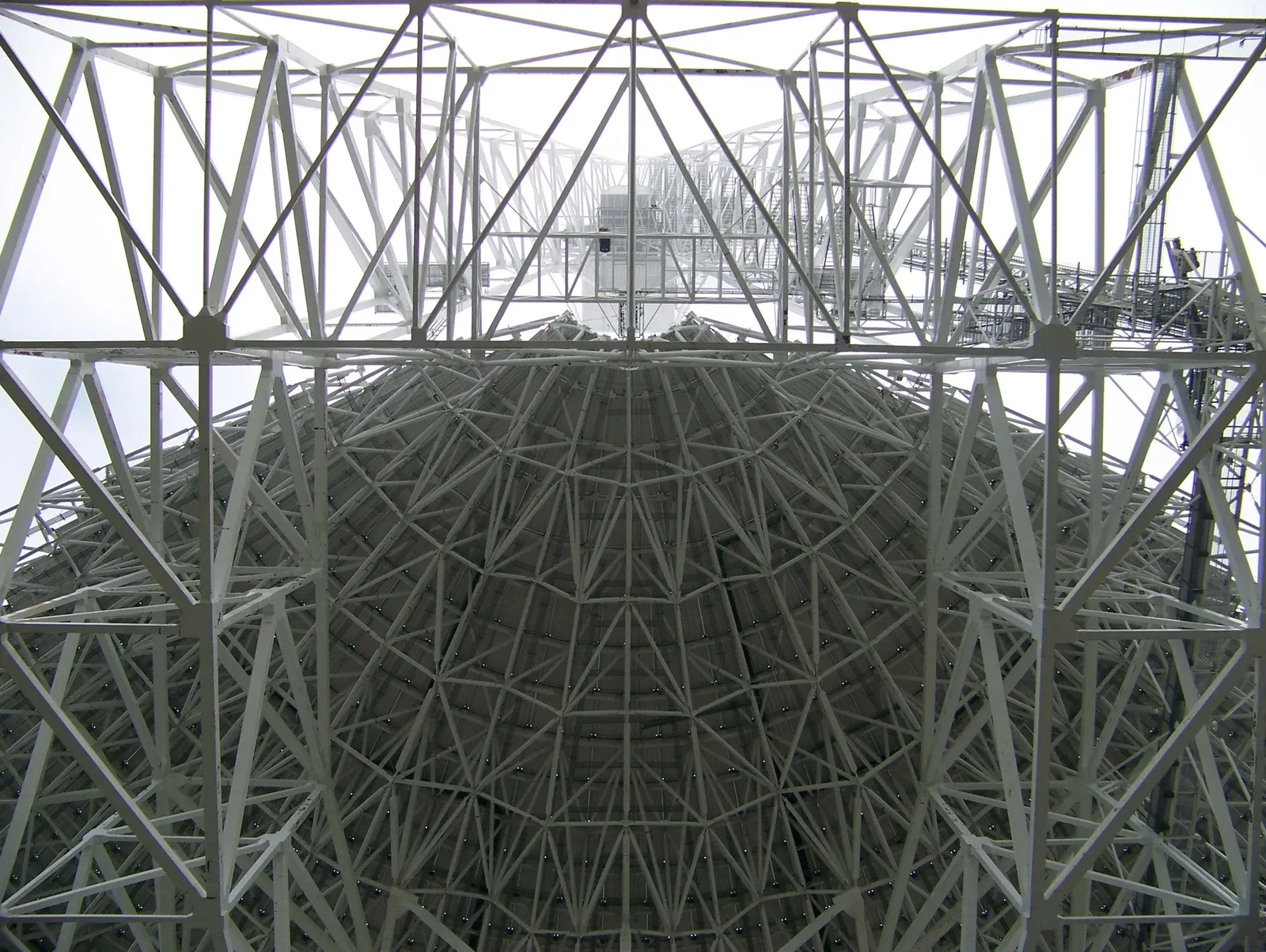
A June 2026 NANOGrav preprint revisited the 15-year observations with more tailored models of these frequency-dependent effects. It reported stronger evidence for the Hellings–Downs correlations, while also changing the inferred background spectrum. This was a new analysis of the same dataset, not fifteen more years of observing. Improved noise treatment could strengthen the collective signal and still alter what researchers inferred about its strength and origin.
The source population is a further question. Supermassive black-hole binaries can produce a background in this frequency range, but the measured spectrum does not uniquely establish that every contribution comes from them. Evidence for gravitational waves and identification of their producers are related tasks with different requirements.
Finding one pair
An individual binary should contribute a coherent signal with its own frequency and direction. Information from light can help narrow the search. If an active galaxy's variability suggests a possible binary, astronomers can investigate a smaller range of locations and wave frequencies than they would in a search across the whole sky.
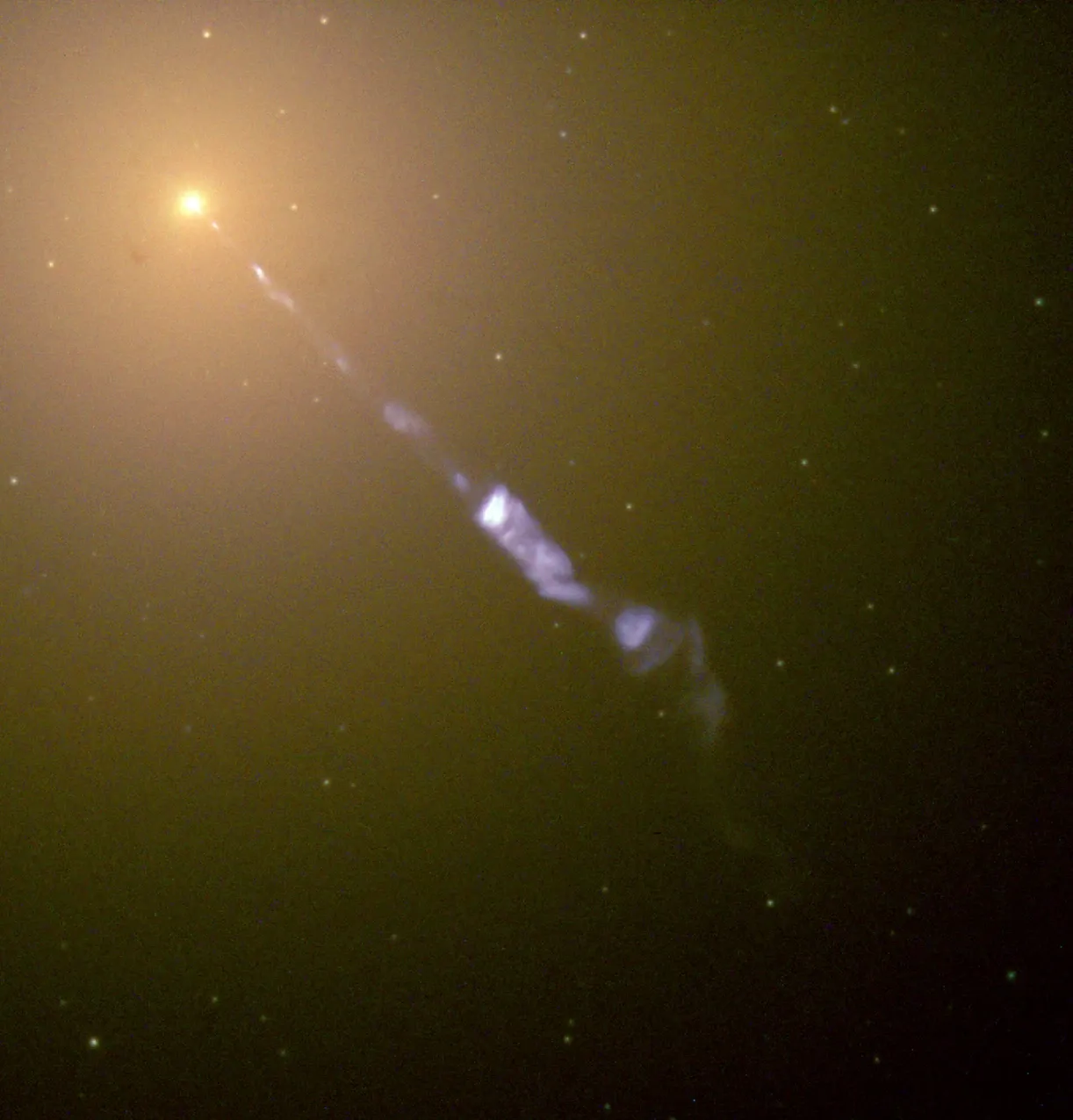
That advantage does not make the candidate a detection. In a study published in 2026, Nikita Agarwal and colleagues searched for continuous gravitational waves from 114 active galactic nuclei that might contain supermassive black-hole binaries. Electromagnetic information improved the constraints they could place on proposed sources. None supplied statistically significant evidence for a continuous wave.
Two targets showed weak preferences that warranted closer examination. The team tested their coherence, compared them with searches at other locations and allowed for the fact that 114 targets had been investigated. When many places are examined, a few modest fluctuations become less surprising. The two cases remained consistent with noise. The June noise-model preprint subsequently reported reduced support for those same candidates.
This kind of result can constrain a binary model without proving that a galaxy contains no binary at all. A source may emit below the experiment's sensitivity. A similar distinction appears in the journal's account of a LIGO search around Cygnus X-1, although that experiment sought a different signal from hypothetical particles around a black hole.
The pulsar array has evidence for a collective gravitational-wave pattern. Assigning part of it to a particular pair of black holes requires the source's own coherent signature to stand up to the background and the tests.