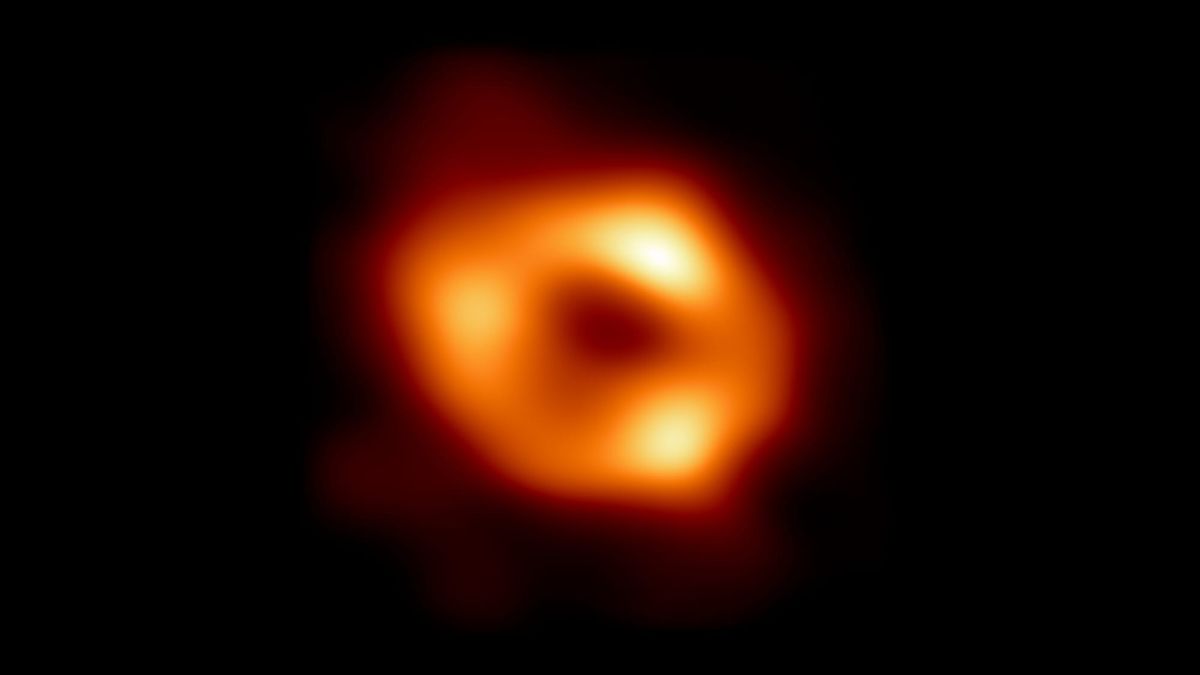
The Event Horizon Telescope's 2022 image of Sagittarius A* shows a bright ring around a dim center. The light comes from hot gas near the compact object at the heart of our galaxy. Much of what we can measure therefore belongs to matter still outside the black hole. For another kind of object to produce the same view, what would its gas have to do?
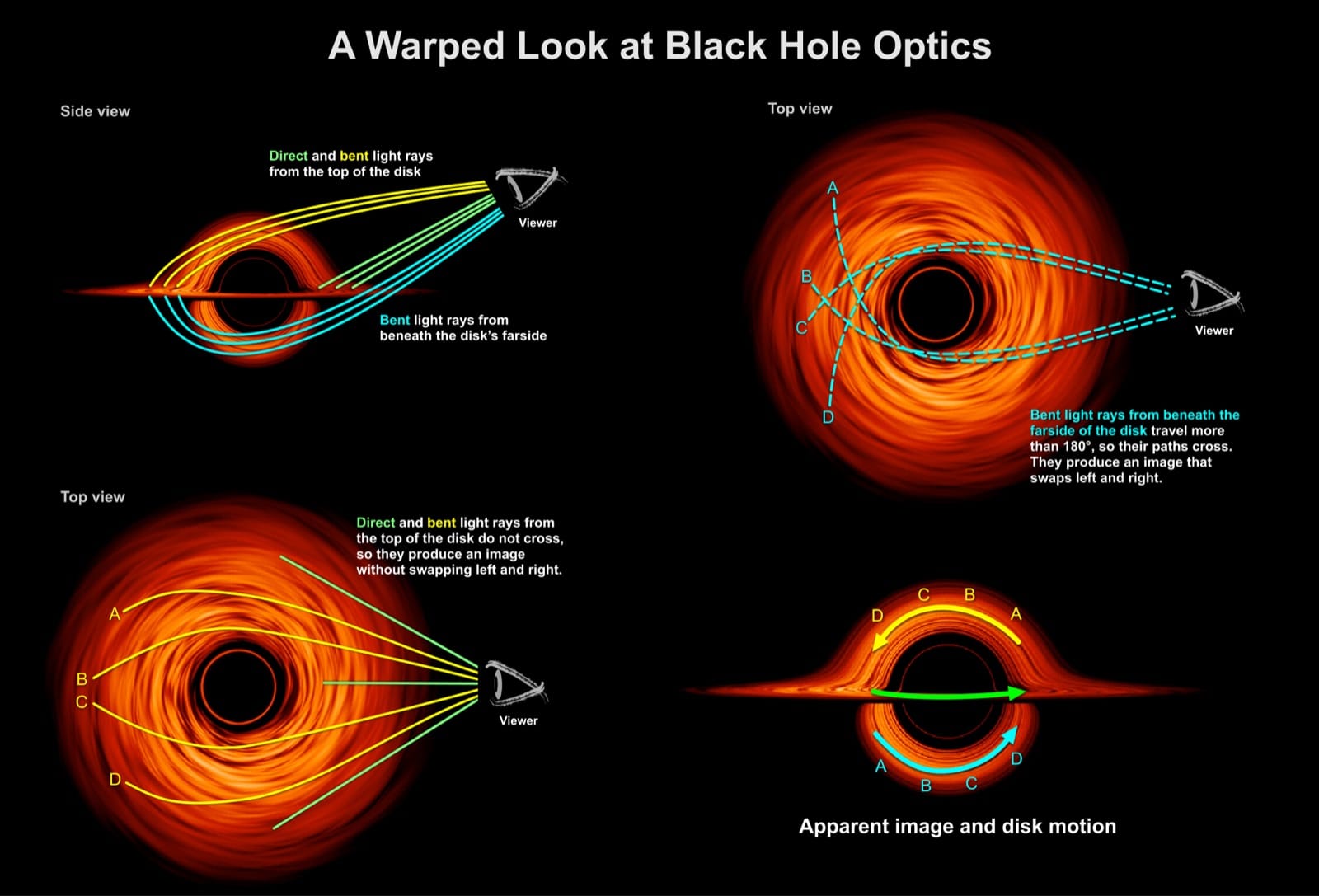
An event horizon is a boundary beyond which light cannot escape. The dim region in the image is not a direct tracing of that boundary. Gravity bends light on its way out, while the gas determines where much of that light originates. An alternative has to account for both.
A resemblance with conditions
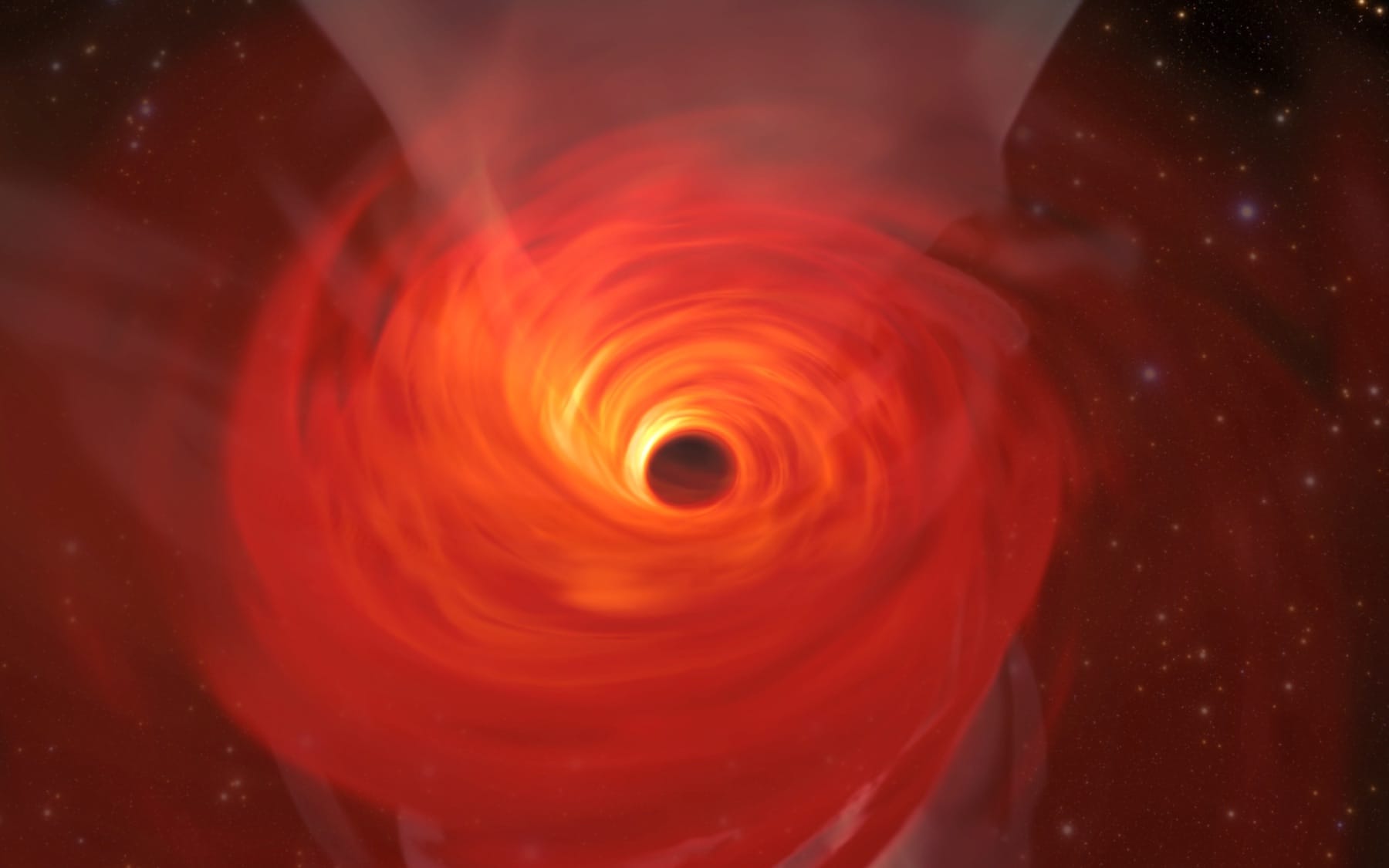
A boson star is one proposed alternative: a hypothetical object in which a field associated with particles called bosons is held together by its own gravity. The models considered here have neither an event horizon nor a hard surface.
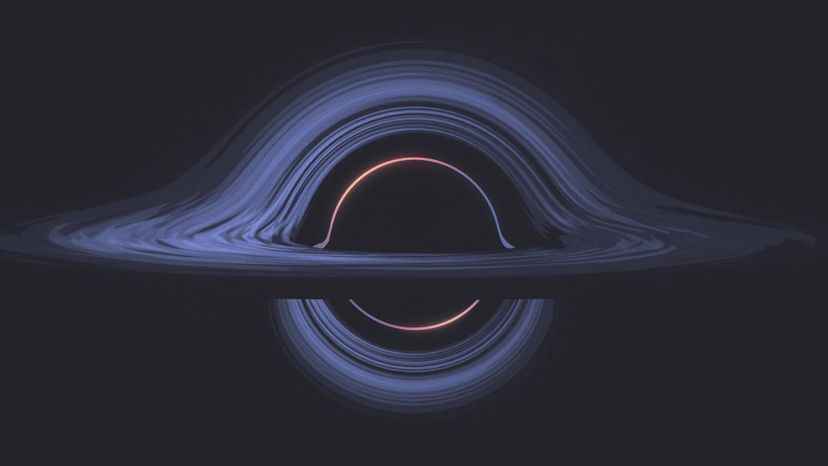
In 2016, F. H. Vincent and colleagues calculated images of boson stars surrounded by a doughnut-shaped distribution of emitting matter. One rotating configuration closely resembled a rotating black hole, with a faint center and a bright structure produced by strongly bent light.
The gas arrangement in that calculation was fixed in advance. It was stationary and stopped short of the center; gas flowing farther inward and emitting enough radiation could change the view. The researchers acknowledged this possibility, and their closest-looking example also had stability problems. The resemblance depended on an arrangement whose persistence remained an open question. Vincent and colleagues, 2016
Following the gas as it moved would give astronomers something more to compare than an imposed arrangement.
Where the gas goes
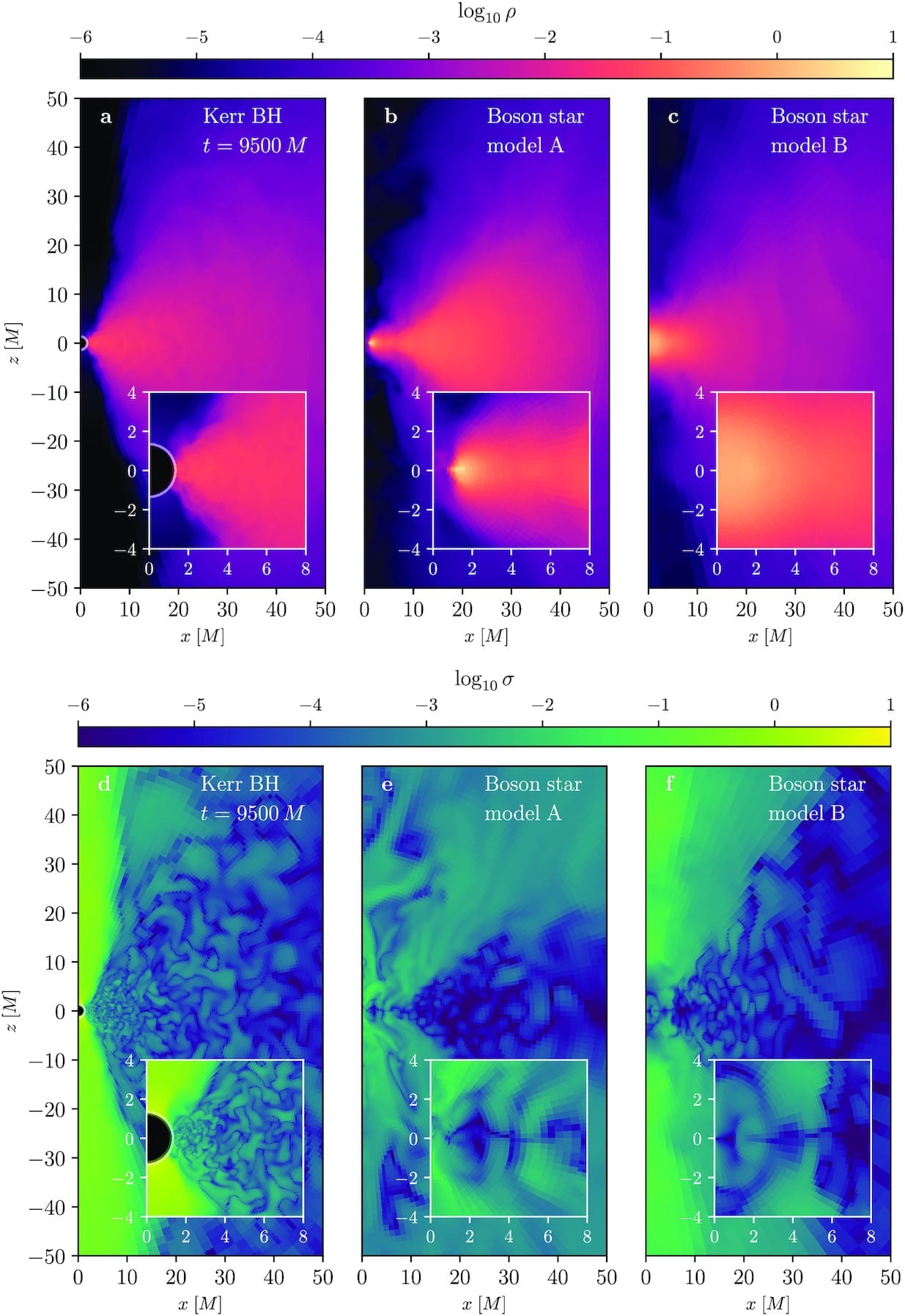
Hector Olivares and colleagues did this in a 2020 study, following magnetized gas through three-dimensional simulations. They compared two nonrotating boson-star models with black holes of the same mass. These differed from Vincent's rotating example, so the study was not a direct retest of it.
Without a horizon to swallow it, gas could occupy regions inside the boson stars. In model A, however, the inward flow stalled in a small torus—a doughnut-shaped accumulation of matter—rather than continuing to the center.
Orbiting gas needs to shed angular momentum, the quantity describing its rotational motion, to spiral inward. Magnetic stresses can transfer that momentum outward. In model A's interior, the instability driving this transfer was suppressed. Orbital motion helped hold the material away from the center, leaving a dim middle when the team calculated the radiation. The emitting region was smaller than in the black-hole comparison.
Model B filled differently. Gas continued inward and collected in a central cloud, producing a bright interior. Both models lacked a horizon, yet their gas collected differently and produced different distributions of light.
These simulations treated the gas as too light to change the central gravitational field. They could follow its motion within that field, but could not establish what the accumulating matter might eventually do to the boson star itself.
A difference a telescope can see
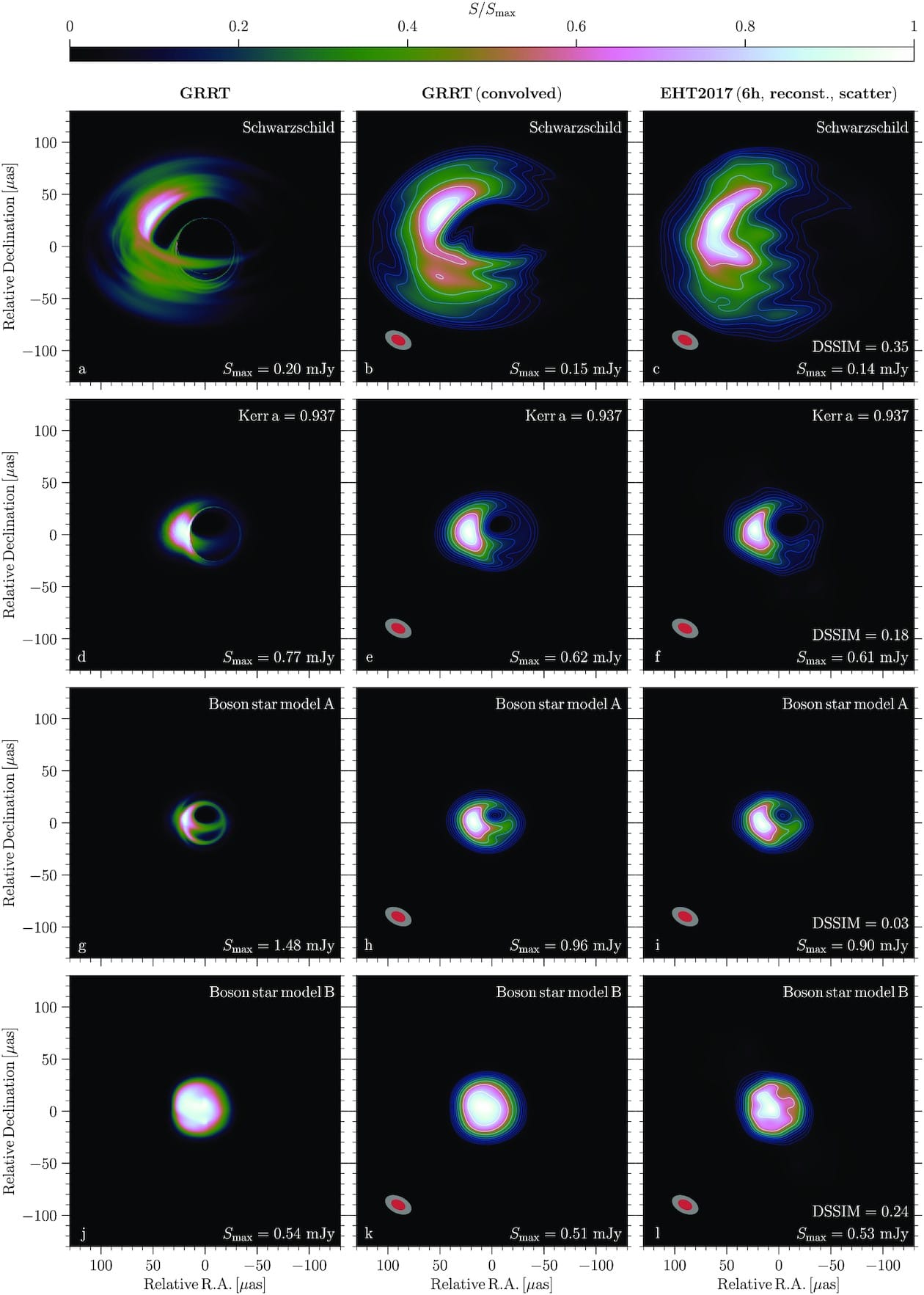
A difference between calculated images still has to survive observation. Olivares and colleagues took their predicted radiation through a simulated observing process, accounting for interstellar scattering, telescope noise and gaps between observing scans. They then reconstructed images from those simulated data. This brought the comparison closer to what astronomers could recover from an observation, rather than what was visible in the underlying calculation.
In its 2022 analysis of Sagittarius A*, the Event Horizon Telescope collaboration considered these two examples using Olivares and colleagues' simulations. It applied observational constraints to their predictions rather than independently repeating the gas simulations.
Model A's emitting region was too small. It could retain a dark middle and still fail to match the measured source size. Model B failed for a different reason: its central cloud made the interior bright where the observations showed a depression in brightness.
Those failures narrowed the possibilities to investigate. The collaboration called for a broader study of rotation, compactness and surroundings before reaching a general verdict on boson stars. The two configurations had failed; other choices still needed their own calculations and comparisons.
What the comparison leaves open
Changing the setup can change the resemblance. In 2024, João Luís Rosa and colleagues examined boson-star models whose field could interact with itself, surrounded by thin disks. Certain compact configurations closely reproduced disk properties and images associated with a nonrotating black hole.
For those calculations, the researchers chose a mass of 14.8 times the Sun's mass, motivated by Cygnus X-1. Their disk was thin in shape but opaque to radiation passing through its thickness. That differs from the hot, relatively transparent flow used to model Sagittarius A*. The closer match belonged to this other setup; it did not restore either of the rejected examples. Rosa, Pelle and Pérez, 2024
Black-hole models have difficulties with the gas, too. In a companion 2022 study, the Event Horizon Telescope collaboration tested its main set of accretion models against eleven observational constraints. None passed all eleven. Their brightness commonly varied more strongly than the measurements allowed, and some exploratory models that initially passed failed when the simulations ran longer.
The authors considered incomplete gas physics among the possible explanations, including the treatment of cooling and the behavior of the plasma. Those possibilities concern how the matter behaves around the central object. They do not establish that replacing a black hole with a boson star would solve the problem. EHT astrophysical-model study, 2022
Two questions remain. Does the proposed central object produce the wrong distribution of light under the tested conditions? And how faithfully does the calculation describe the gas? Both matter to the prediction. Trouble with the gas calculation does not by itself decide what belongs at the center, just as agreement with one image does not establish agreement with all the observations.
For the two Sagittarius A* alternatives examined here, the failures were specific: an emitting region too small in one case, an interior too bright in the other. A workable alternative would have to account for those measurements with a calculation of gas moving in the proposed object's gravitational field. It has to explain why the light comes from the places it does.