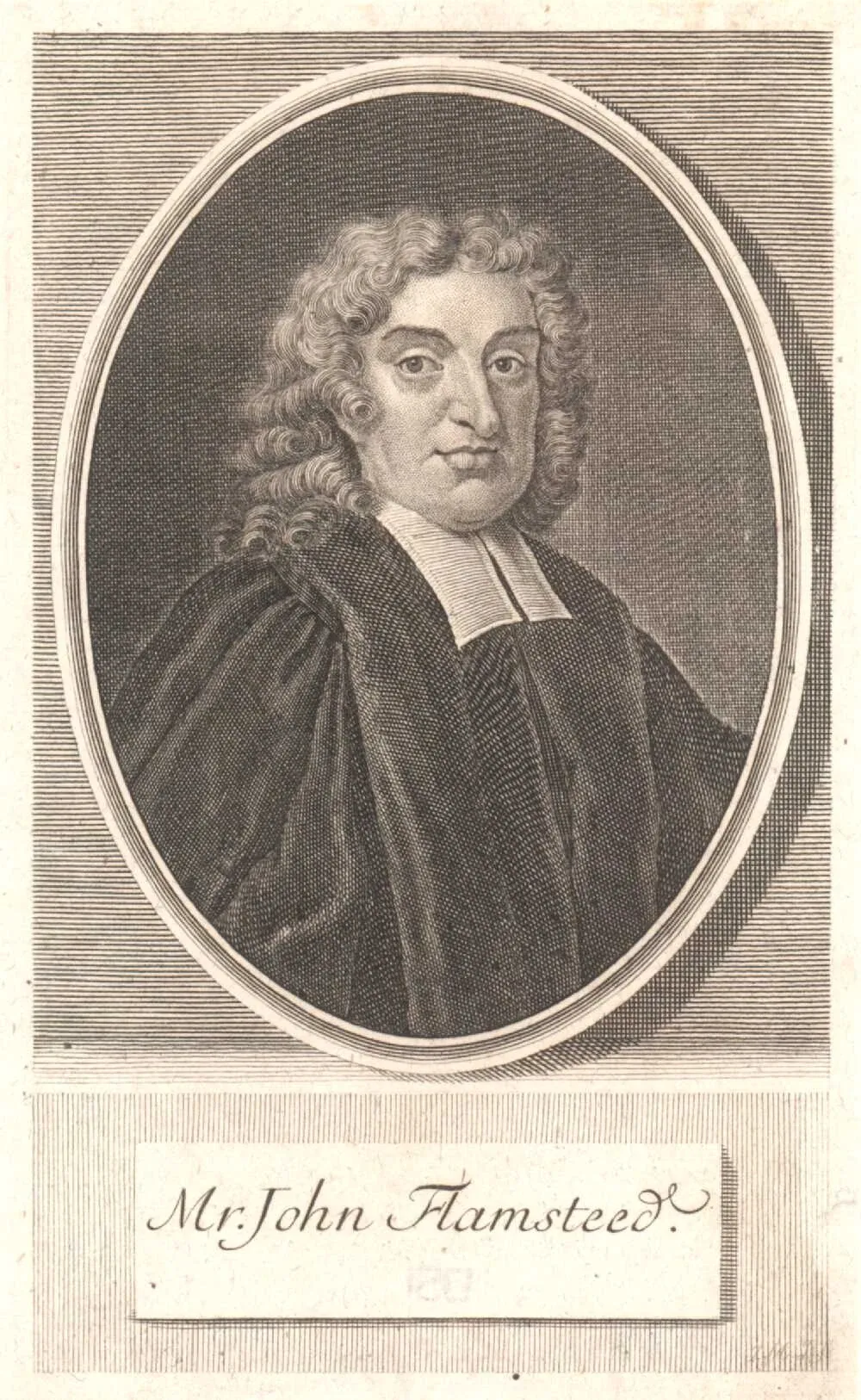
In 1680 John Flamsteed recorded a faint star that later astronomers could not securely identify. The observation became associated with a catalogue entry called 3 Cassiopeiae. It was a small uncertainty in a much larger undertaking. Appointed England’s first Astronomer Royal five years earlier, Flamsteed was measuring stellar positions to help produce a more accurate map of the sky. Sailors needed such measurements in the effort to determine longitude. There were ships to navigate beneath those stars.
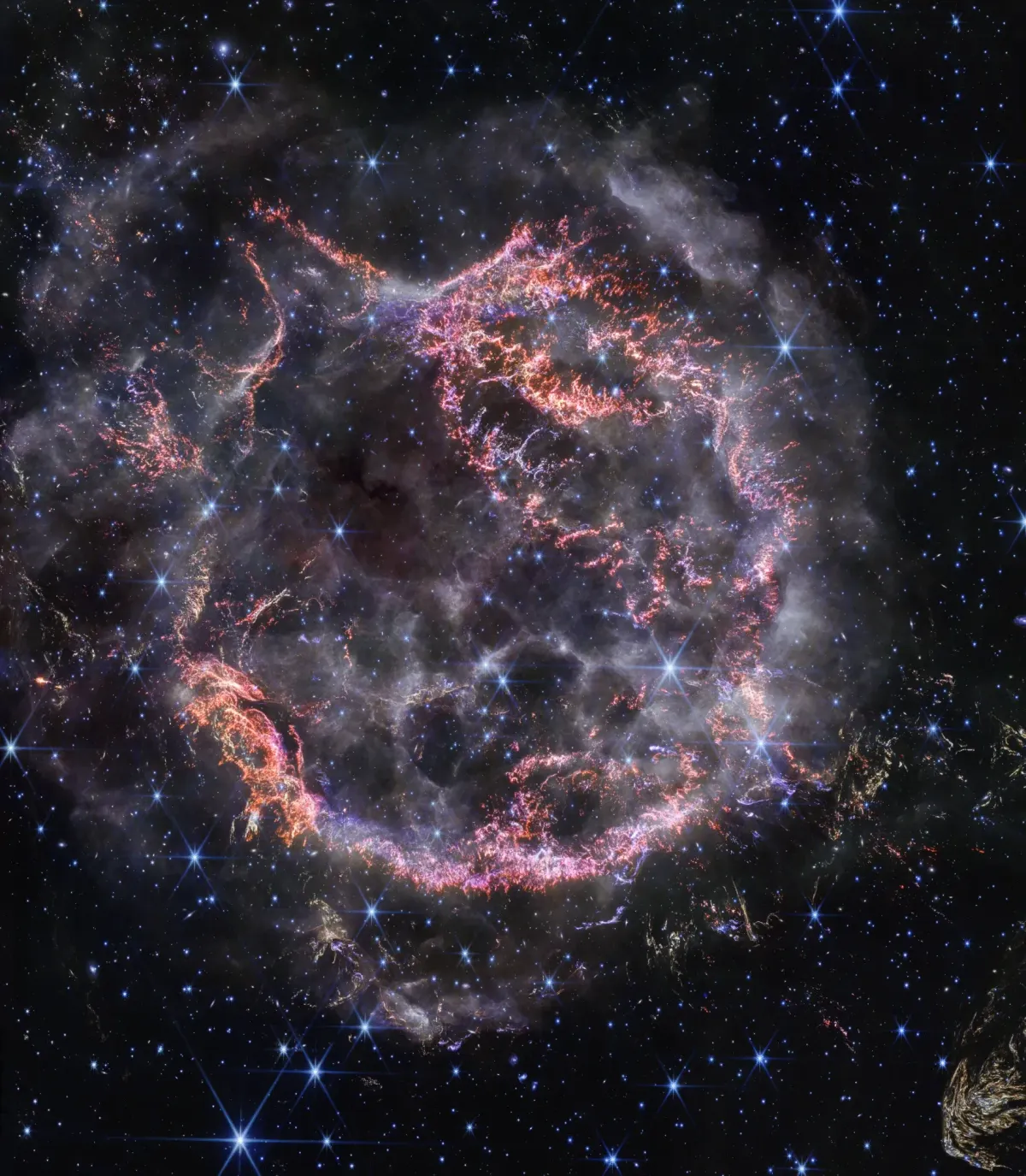
The troublesome entry acquired another possible significance centuries later. Its recorded position was near Cassiopeia A, the expanding remains of an exploded star. Perhaps Flamsteed had caught the supernova while it was visible from Earth. Perhaps he had simply recorded the position of an ordinary star inaccurately. The positions do not match exactly and the identification remains disputed. A witness may have been found. His testimony does not quite settle the matter.
The explosion itself is beyond that historical uncertainty. Radio astronomers identified a powerful source in Cassiopeia in the late 1940s, and optical observers subsequently associated it with faint wisps of material. The wreckage was spreading. Trace the fragments’ motions backwards, allowing for uncertainty about how they had slowed, and the arrival of the explosion’s direct light falls in the late seventeenth century.
An approximate date could thus be recovered from the debris without finding anyone who had reliably written it down. Much more could be learned from that debris too. By the time a new result appeared in 2008, NASA described Cassiopeia A as the subject of more than a thousand scientific papers. Astronomers had examined it across the electromagnetic spectrum. Yet they were still arguing about what kind of explosion had made it.
Some fast-moving clumps contained hydrogen. Most showed little sign of it. The relative abundance of nitrogen complicated the interpretation further, encouraging an account in which the star had been stripped more thoroughly before it died. These were useful clues and they had sustained competing explanations. The remnant was hardly silent.
What astronomers lacked was light from the outburst itself, carrying the spectral features by which modern observers classify a supernova. Even an undisputed entry in Flamsteed’s records would not have supplied that measurement. In 2007 an international team led by Oliver Krause found a way to obtain it.
Their search took them away from the visible wreckage and into the surrounding interstellar dust.
Dust is often an obstruction in astronomy. It absorbs light or scatters it out of our line of sight, making objects dimmer and sometimes concealing them altogether. But scattering can also send light towards us that originally went somewhere else. When Cassiopeia A’s star exploded, some of its light headed directly towards Earth. Other light travelled out to dust clouds and scattered in our direction from there. The second journey was longer. Some of that light could therefore reach Earth centuries after the direct flash had passed.
This was a light echo. The delay belonged to the route the light had travelled. Nothing had been sitting in the cloud for three hundred years waiting to be released.
The distance to Cassiopeia A is roughly 11,000 light-years, so even the light that took the direct route had travelled for thousands of years before it entered the seventeenth-century sky. The echo added another interval to that already long journey. For observers on Earth the difference between the two arrivals was enough to put a modern spectrograph in the path of light from an event that might once have caught Flamsteed’s eye.
Finding a usable patch was another problem. Clouds do not oblige by scattering enough light in a convenient direction, and an echo that can be photographed may still be too faint to yield a useful spectrum. Suitable patches can fade within weeks. The star had been dead for thousands of years but the observing opportunity could be brief.
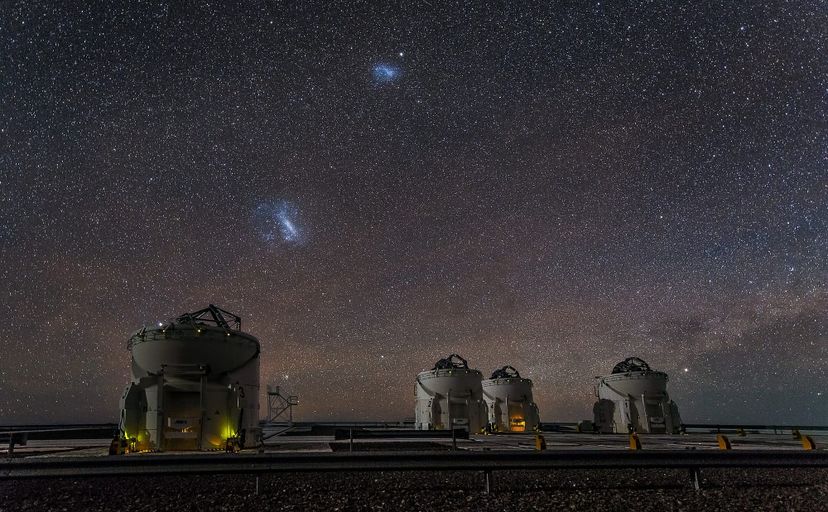
Krause’s team began regular monitoring in 2006. NASA’s Spitzer Space Telescope searched in the infrared while the 2.2-metre telescope at Calar Alto in Spain monitored the region in visible light. Spitzer was useful because dust can respond to a passing flash in two ways. Some light scatters. Some is absorbed, warming the grains and causing them to emit new radiation at infrared wavelengths. That heat signal could point the researchers towards a place where scattered visible light might also be found.
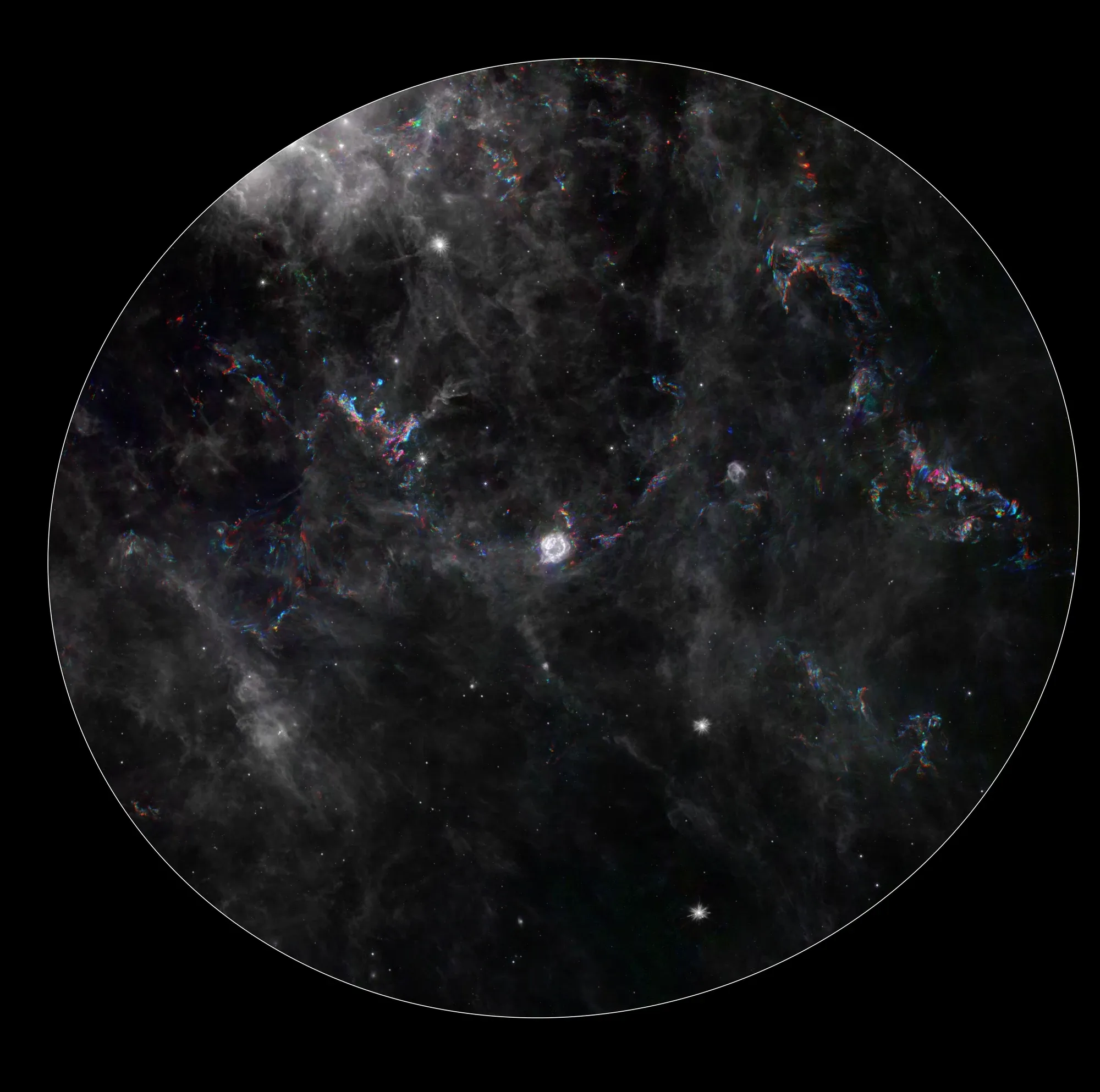
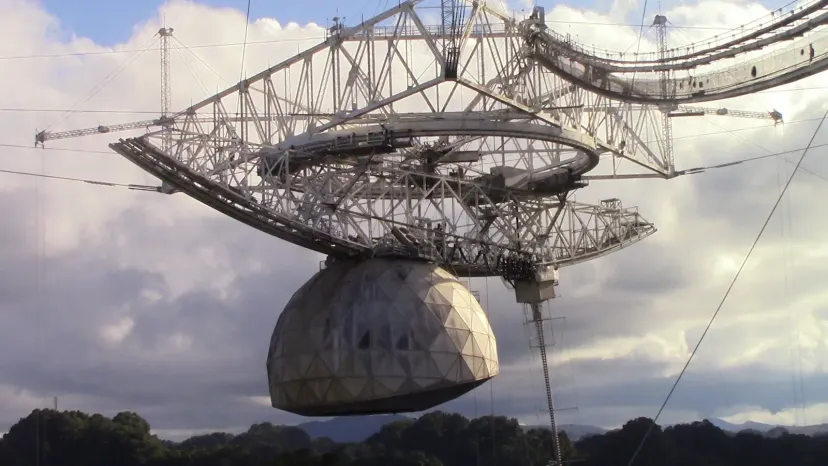
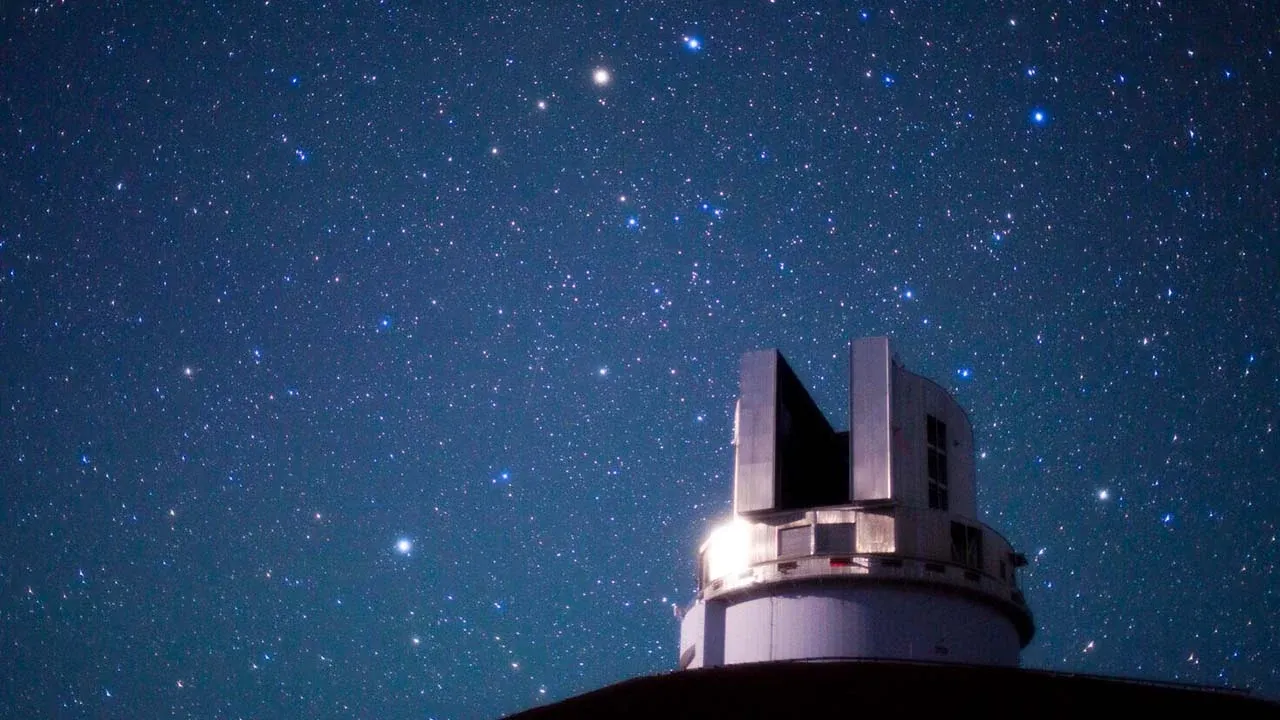
On 20 August 2007 a Spitzer image revealed a bright infrared feature northwest of Cassiopeia A. On 6 October Calar Alto recorded an associated optical echo. Three days later the Subaru telescope in Hawaii turned its Faint Object Camera and Spectrograph towards the target.
The echo was fainter than expected. Subaru’s account says it was two magnitudes below the anticipated brightness, roughly one-sixth as bright. The team accumulated five and a half hours of exposure. At the end they had enough light to distinguish features belonging to the long-vanished explosion.
A spectrum records the strength of light across a range of wavelengths. Atoms leave characteristic features in the distribution, so astronomers can use the light to investigate the gas that emitted or absorbed it. In the echo there was a broad hydrogen feature along with signs of helium. This was information from the outburst’s early development, reaching the telescope by way of a dust cloud while astronomers could also see its debris after centuries of expansion.
But an explosion changes as it unfolds. A spectrum taken early can look different from one taken several weeks later. The presence of hydrogen and helium had to be understood in that moving history, and another star’s destruction supplied a particularly useful comparison.
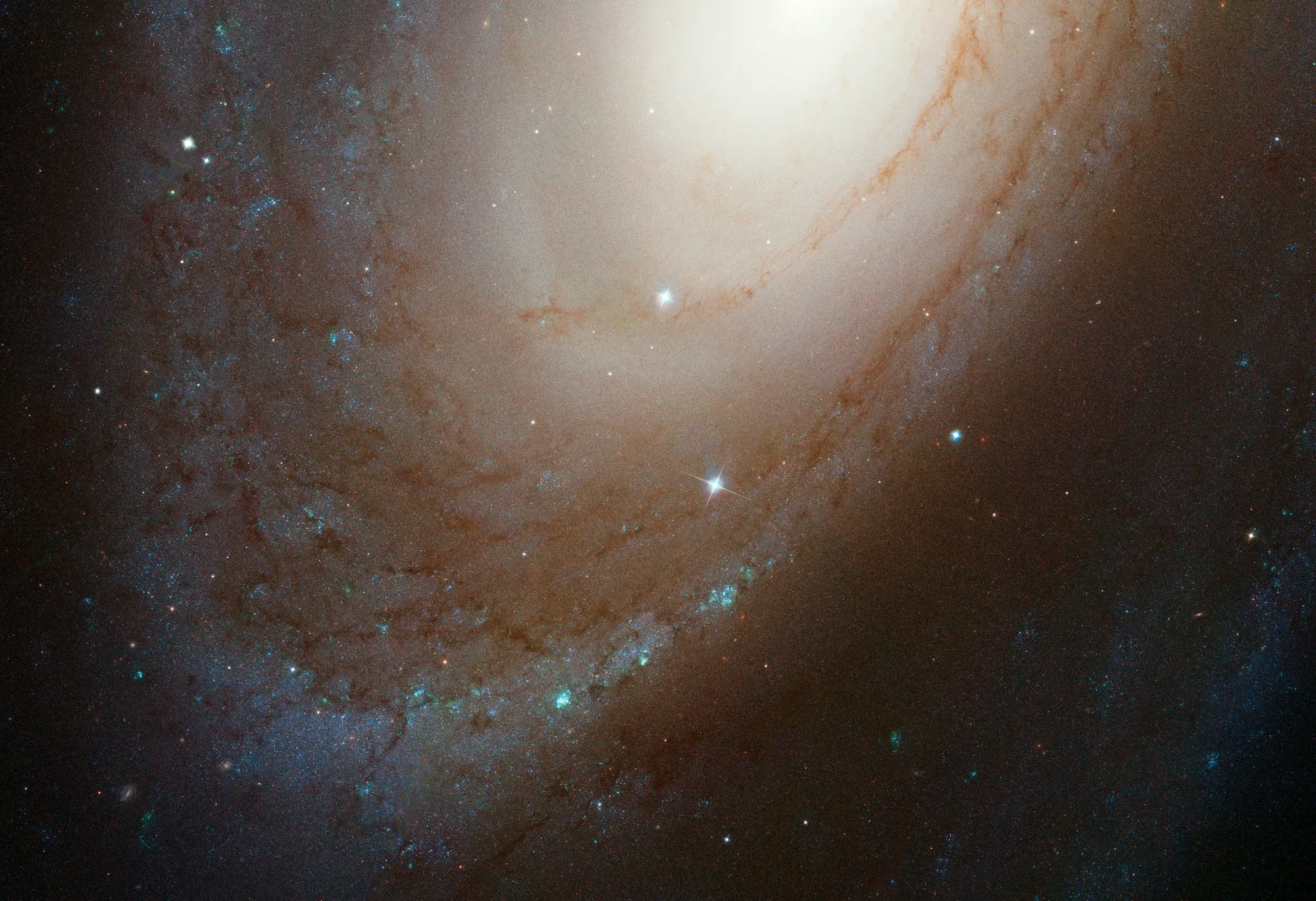
On 28 March 1993 Francisco Garcia discovered a supernova in the galaxy M81. Astronomers called it SN 1993J. In a later account, Alexei Filippenko and Thomas Matheson recalled receiving a rough chart of its position by fax through the American Association of Variable Star Observers. A location could be passed from one observer to another and telescopes directed towards it. The early outburst was followed almost nightly.
That accumulated record was precisely the kind of evidence Cassiopeia A lacked. In late March the spectrum of SN 1993J was predominantly blue with little prominent structure. By the middle of April it resembled a familiar hydrogen-bearing supernova. Then helium features grew stronger. By day 45 much of the series of neutral-helium lines was apparent. The object’s changing appearance gave astronomers a way to interpret what had happened beneath the surface of the star.
The explanation involved a massive star that had lost most of its outer hydrogen envelope before its core collapsed. A relatively thin layer of hydrogen remained above the helium-rich interior. As the explosion developed, helium became more prominent in the spectrum. This behaviour belonged to the class called Type IIb, a name that compresses into a few characters a history of what observers saw changing from week to week.
Krause’s team had the old explosion’s echo and the newer explosion’s recorded development. Comparing them required care because the echo was already a mixture of times.
A dust cloud has depth. Light scattered from one part of it travels a slightly different distance from light scattered from another. The light arriving together at Subaru could therefore include emissions from different stages of the outburst. Five and a half hours at the telescope did not mean five and a half hours in the life of the supernova. Nor did the spectrum represent one isolated night that a seventeenth-century observer had missed.
The researchers assembled a comparison covering the first 83 days of SN 1993J, using observations from different dates and models for the earliest spectra. They weighted the contributions by brightness so that luminous stages counted more heavily. The resulting combination was dominated by the period near SN 1993J’s second brightness peak, around day 20. It was a way of comparing a mixture with a mixture while respecting what the cloud’s geometry allowed.
The journey through dust had also changed the balance of wavelengths in the received light. The analysis accounted for extinction along the path and for the fact that dust scatters some wavelengths more efficiently than others. Even the last stretch through Earth’s atmosphere left absorption features to remove. A reference star observed in the same spectrograph slit helped with that correction.
After this work the resemblance to SN 1993J supported a definite conclusion. Cassiopeia A had been a Type IIb supernova. Krause and his colleagues published the result in Science on 30 May 2008.
The hydrogen found in a few pieces of wreckage now belonged within a clearer account. The exploding star had retained some hydrogen even after losing most of its envelope. Astronomers could relate the remnant’s composition and expansion to a class of outbursts whose development had been followed with modern instruments.
The echo could not establish exactly how bright the supernova had looked from Earth. Too much depended on the density and composition of the scattering cloud. It also could not deliver a complete nightly record of the original brightening and fading. Knowing the explosion’s class did not turn the disputed catalogue entry into a confirmed sighting.
Nor was the spectrum a portrait of the star immediately before it died. Later research retained the Type IIb classification while reconsidering the progenitor’s final condition. The largely stripped hydrogen envelope was a firmer conclusion than the star’s precise final temperature or the history of how it had lost so much material. Astronomers continued to examine material around the remnant, including gas shed before the explosion, for traces of the life that had preceded it.