
Every four months, the partners were to take stock. Their agreement would last a year, and each would receive half the profit and bear half the loss. These provisions survive in a damaged document from medieval Egypt. The accounts themselves do not.
We can see how the partners meant to make their business answerable to one another, although we cannot follow a particular sale through their books. A reporting interval, a division of risk and a statement about whose account could be trusted preserve different parts of that arrangement.
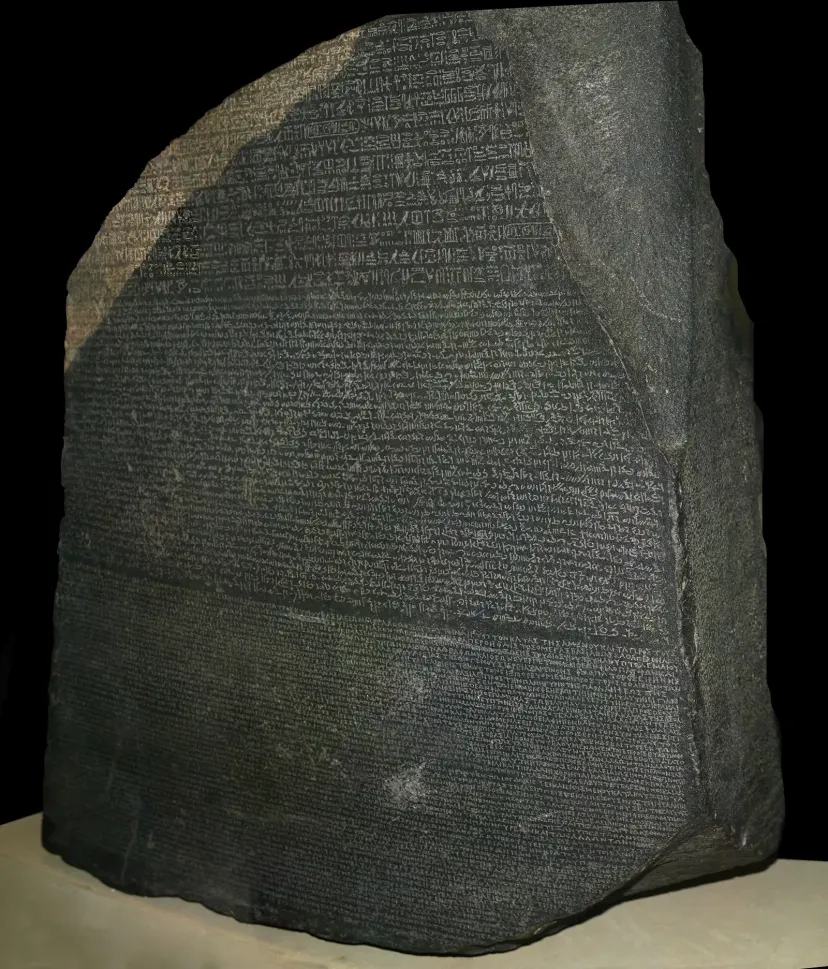
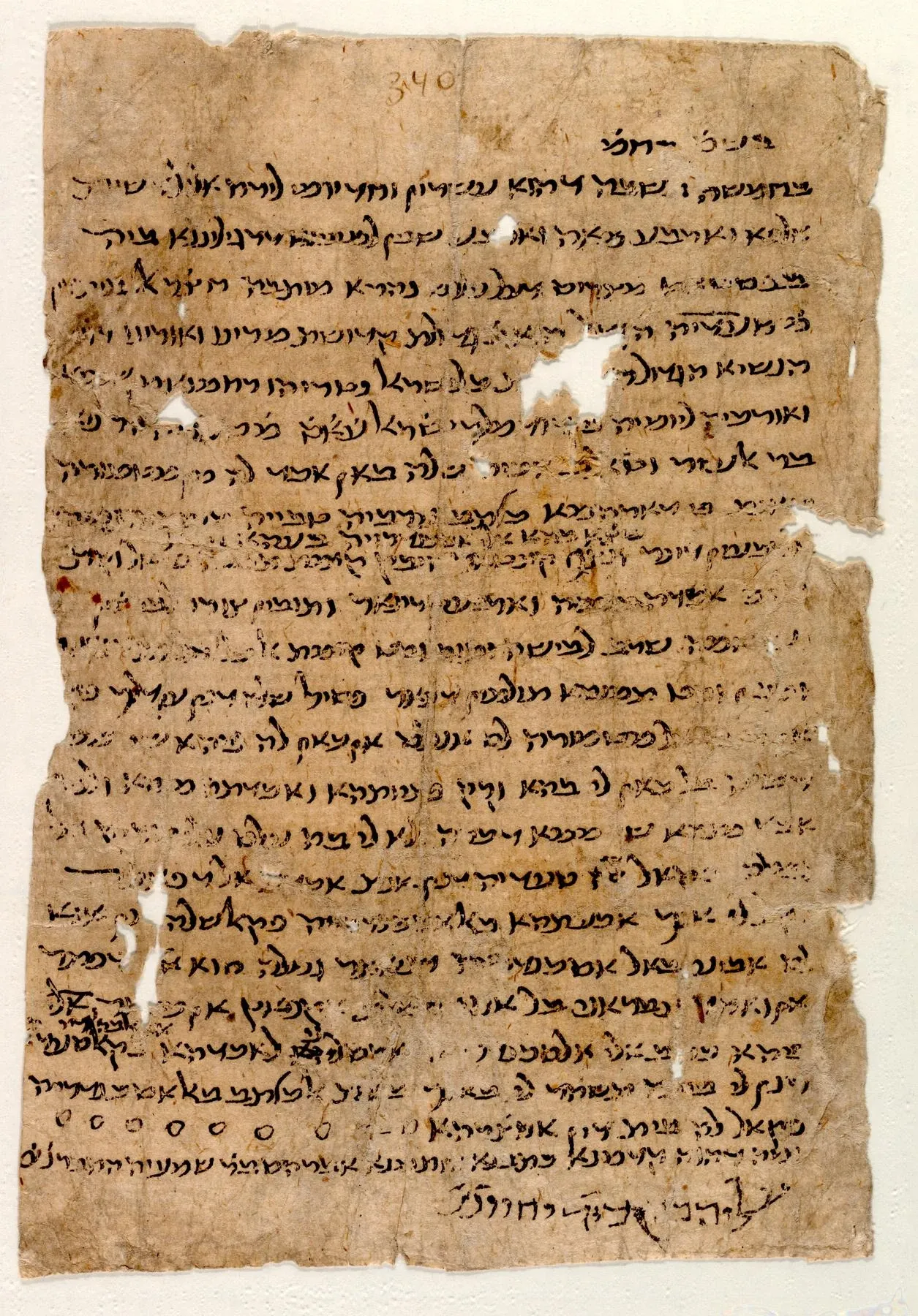
The document, now catalogued as T-S Misc.28.259 in the Princeton Geniza Project, belongs to the Cambridge Taylor-Schechter collection. Its language is Judaeo-Arabic, Arabic written in Hebrew characters. The Rosetta Stone supplies a different relation between script and language, with two scripts used for Egyptian. The court clerk’s handwriting places it between 1100 and 1138. One partner is identified as Yefet son of Avraham, called Japheth in Phillip Ackerman-Lieberman’s English translation. The other partner’s name is missing.
That damage limits the business we can reconstruct. Amounts of money appear beside gaps, and the document’s references to six months have prompted a tentative interpretation of an intermediate distribution. Those broken passages cannot safely supply a complete capital account. The yearlong term and the recurring reckoning are clearer.
A schedule for knowing
A share of profits says what someone should receive. A share of losses says what that person may have to bear. Neither, by itself, tells the partners when they will learn how the business is doing. The four-month interval addresses that separate problem.
It makes the reckoning part of the relationship while the agreed term is still running. A partner need not wait until the entire year has passed before an account becomes due. This is the obligation written into the agreement, not evidence that three surviving reports were actually delivered. No such sequence of reports accompanies the fragment.
The equal division also applies to an unwelcome result. The preserved wording allows for profit and loss, assigning half of either. The partners had also specified how a shortfall would be shared.
Yet the contract is not a ledger. It gives the framework within which a calculation should occur rather than the purchases, expenses and receipts from which a particular balance could be checked. Mistaking one for the other would turn a rule for conducting business into an invented history of the business conducted.

Who could give the account
Reporting raises another question. What would make the account acceptable to the person receiving it?
The preserved agreement includes a declaration of confidence in a partner’s report. Ackerman-Lieberman’s description interprets the arrangement as one in which Yefet did not require the account to be notarized. That reading belongs beside the accounting schedule. They could require a reckoning without requiring every reckoning to become a new notarized document.
This was still a legal agreement. Its surviving ending concerns the responsibility the parties assumed and the document’s use as proof. A formal record could therefore establish obligations while leaving room for one partner to report to another. Calling the arrangement either pure personal trust or pure documentary control would lose the way those features worked together here.
The fragment does not show how confidence had been earned. Nor does it tell us whether it lasted.
When an account was finished
A separate document shows why closure also needed words. In Alexandria on 16 June 1085, Yosef son of Shemuel released Menashshe son of Pinḥas from claims. Their relationship is interpreted as a trading partnership in the Princeton Geniza Project’s description of T-S 18J1.13.
The release ranges over money, precious metals, clothing and merchandise, then reaches accounts and errors in accounting. It also releases obligations concerning oaths and extends the document’s force to heirs. Its breadth is the point. The parties were recording that possible routes to a later claim had been closed.
This list should not be unpacked into a shipment. Mentioning gold, cloth and other goods in a comprehensive release does not establish that every named thing passed between these two people. Likewise, releasing a possible accounting error does not prove that someone had made one. The document works by anticipating claims, including claims that might never have arisen.
Heirs had a practical stake in such wording. Joel Kraemer’s account of a different Geniza letter describes relatives trying to recover a dead man’s investments from his partners when clear evidence was lacking. Maimonides recommended an attempt at settlement and, in specified circumstances, an oath concerning the partnership. Kraemer reports the advice. The letter does not supply the eventual settlement.
The difficulty in that case was identifying what remained due after the investor could no longer speak for himself. A release aimed to settle the opposite proposition, that a named person could no longer pursue the claims it covered, and that this should remain so after death.
Recurring accounts and a final release thus served different moments in a commercial relationship. One kept an obligation to report alive during the business. The other put an agreed ending into a form intended to answer a future demand. The surviving documents preserve that work more clearly than they preserve the fortunes of the people who used them.