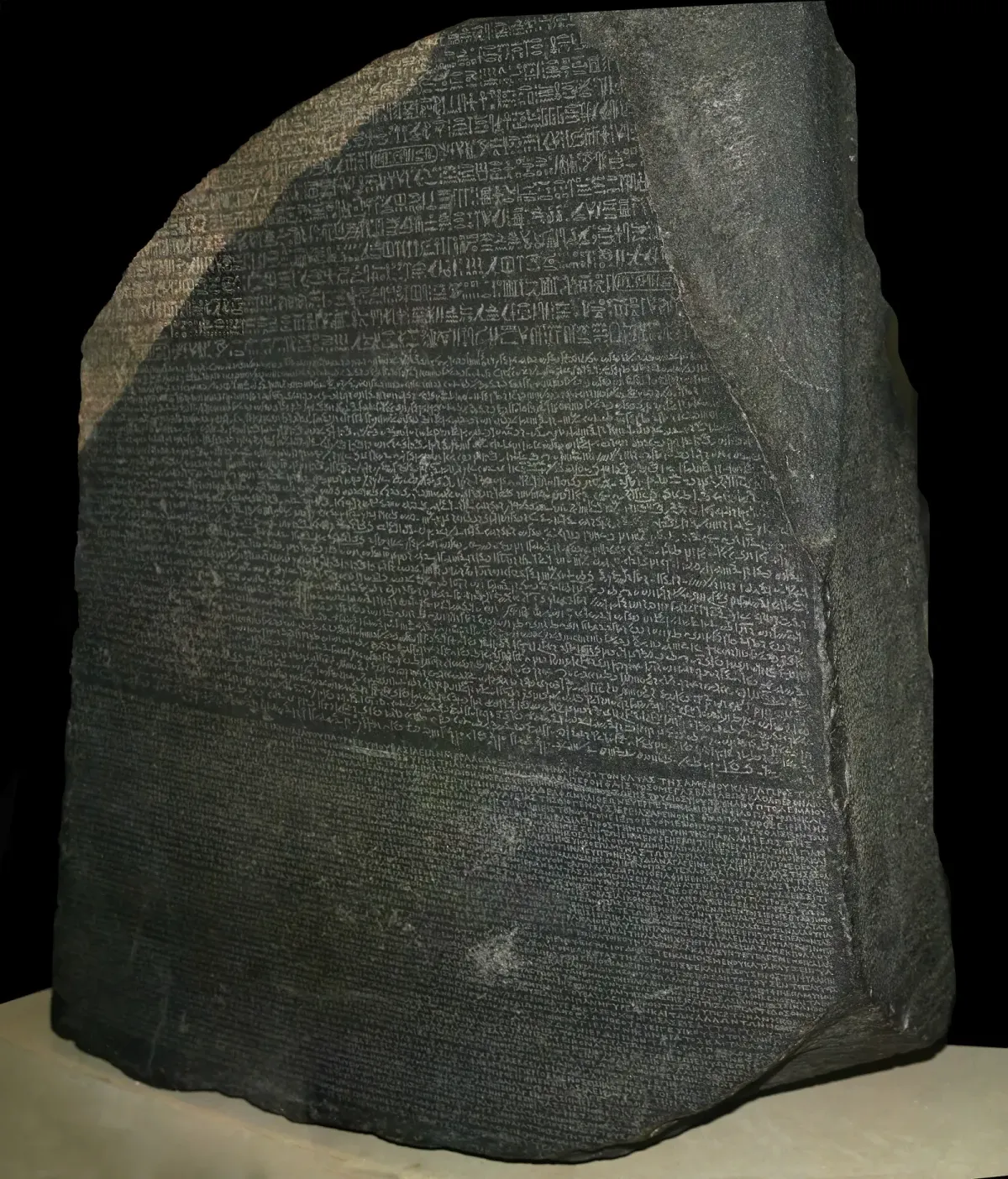
The Rosetta Stone ends with an instruction about where to put it. Copies of the decree were to stand in temples of the first, second and third ranks, beside an image of the king. The writing was one part of an arrangement that also required statues, offerings, festivals and changes to the titles priests used in their documents.
For the people who commissioned the decree in 196 BCE, its future usefulness in deciphering hieroglyphs was no part of the problem. They were honouring Ptolemy V, Egypt's king, and specifying how that honour should become an ordinary feature of temple life. Read from that direction, the famous stone concerns the work of making royal authority present in many places.
The priests are speaking
The decree speaks in the name of priests assembled at Memphis. Its opening identifies several kinds of temple personnel, including those who clothed divine images and those who worked with sacred books. This is a declaration by institutions with their own duties, resources and forms of writing, rather than a personal speech by Ptolemy.
They begin by praising him. In the priests' account, Ptolemy had given money and grain to the temples, protected their property and reduced what they owed. Even the fine linen due to the royal treasury receives attention in R. S. Simpson's translation of the Demotic text. These were resources a temple needed to keep operating, so the praise takes a concrete form in property retained, payments reduced and religious services supported. The decree records the benefactions its authors wished to recognize, rather than accounts against which every delivery can now be checked.
From those benefits, the declaration turns to honours the priests are to install, perform and write. Material support and divine honour belong within the same document. Their sequence does not establish that each concession bought a particular ceremony, or that the priests privately disbelieved the religious claims they made. Recognizing a benefactor and divine ruler could coexist with a close interest in temple obligations.
Three scripts, two languages
The closing instruction asks for sacred writing, document writing and Greek writing. On the stone these appear as hieroglyphic, Demotic and Greek. Hieroglyphic and Demotic are two ways of writing Egyptian, so the familiar three blocks do not represent three unrelated languages.
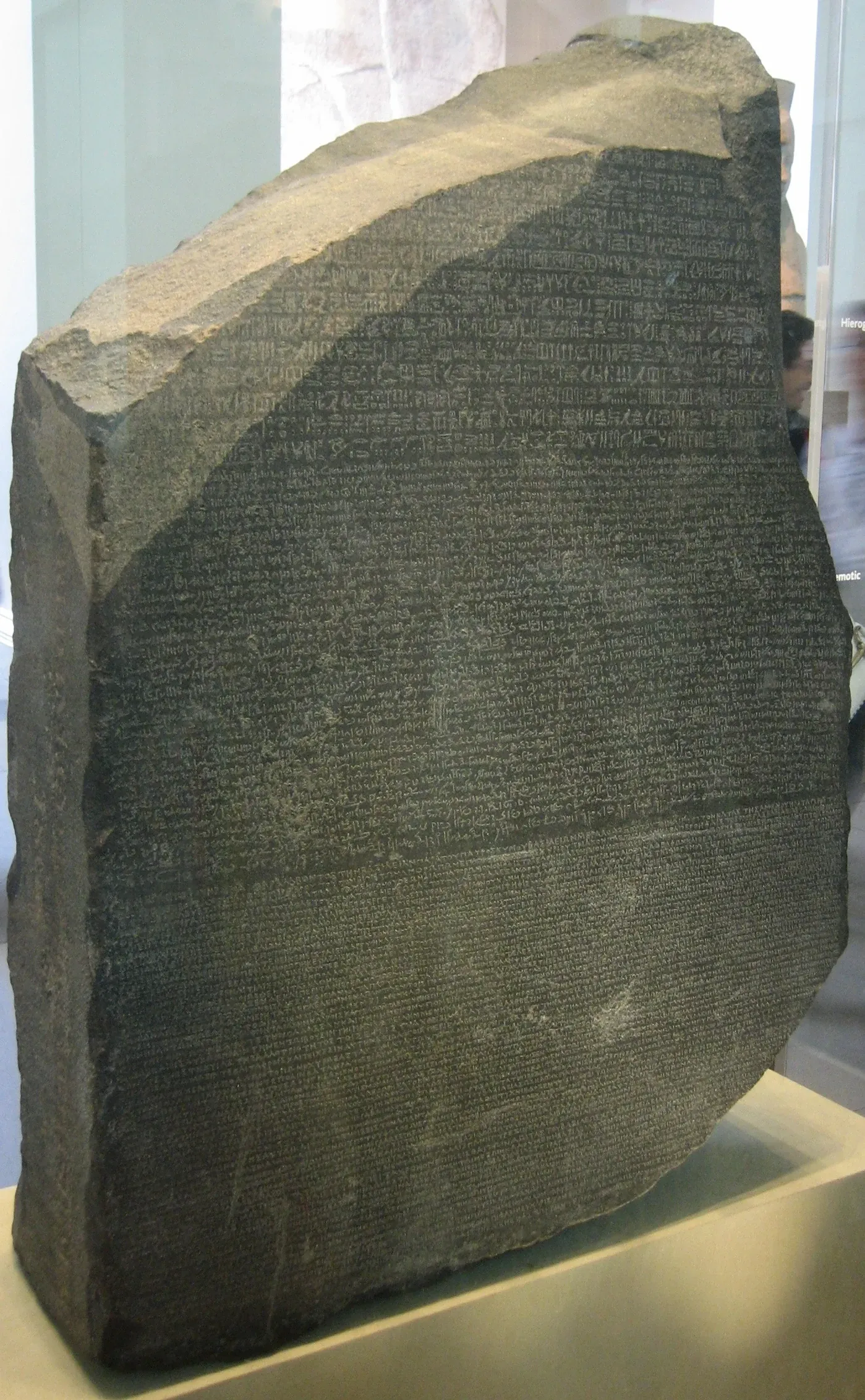
The distinction matters because a script can belong to a particular kind of work. Hieroglyphs served monumental and sacred uses. Demotic wrote Egyptian in a form associated with documents and other ordinary business. Greek also had a place in the administration of a kingdom ruled by the Ptolemaic dynasty.
Marsha Hill's account of Ptolemaic Egypt describes Greek alongside Egyptian and the continuing strength of Egyptian temples. The rulers supported priesthoods and placed their own cults within those institutions. The decree's different written forms belong in that setting, where adopting Greek did not make Egyptian religious practices disappear.
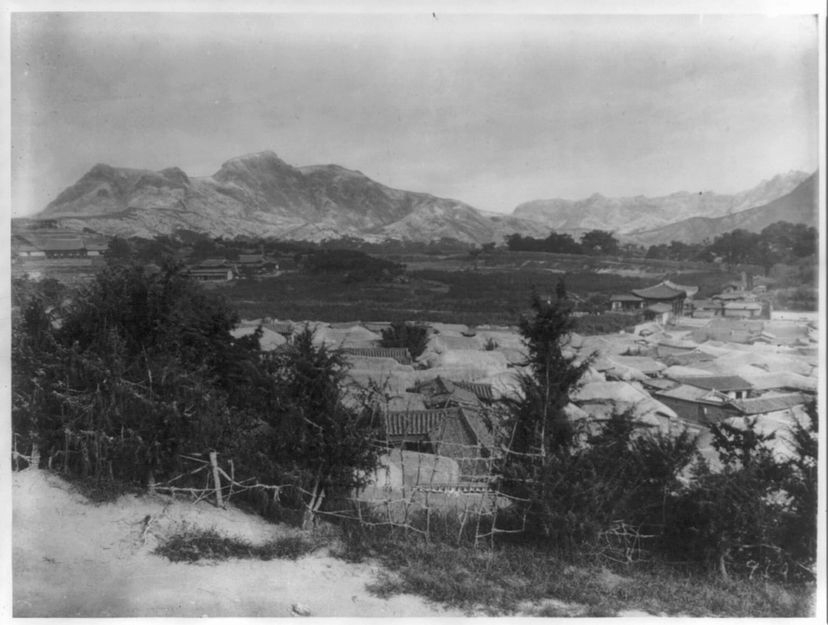
These uses do not divide the audience neatly into priests, ordinary Egyptians and Greeks. The categories could overlap, and the stone supplies no census of its readers. As with the practical arrangements around an 1896 Korean newspaper, providing different written forms leaves a further question about who could use them. The decree also prescribed acts that did not depend on reading the stone.
An image with a routine
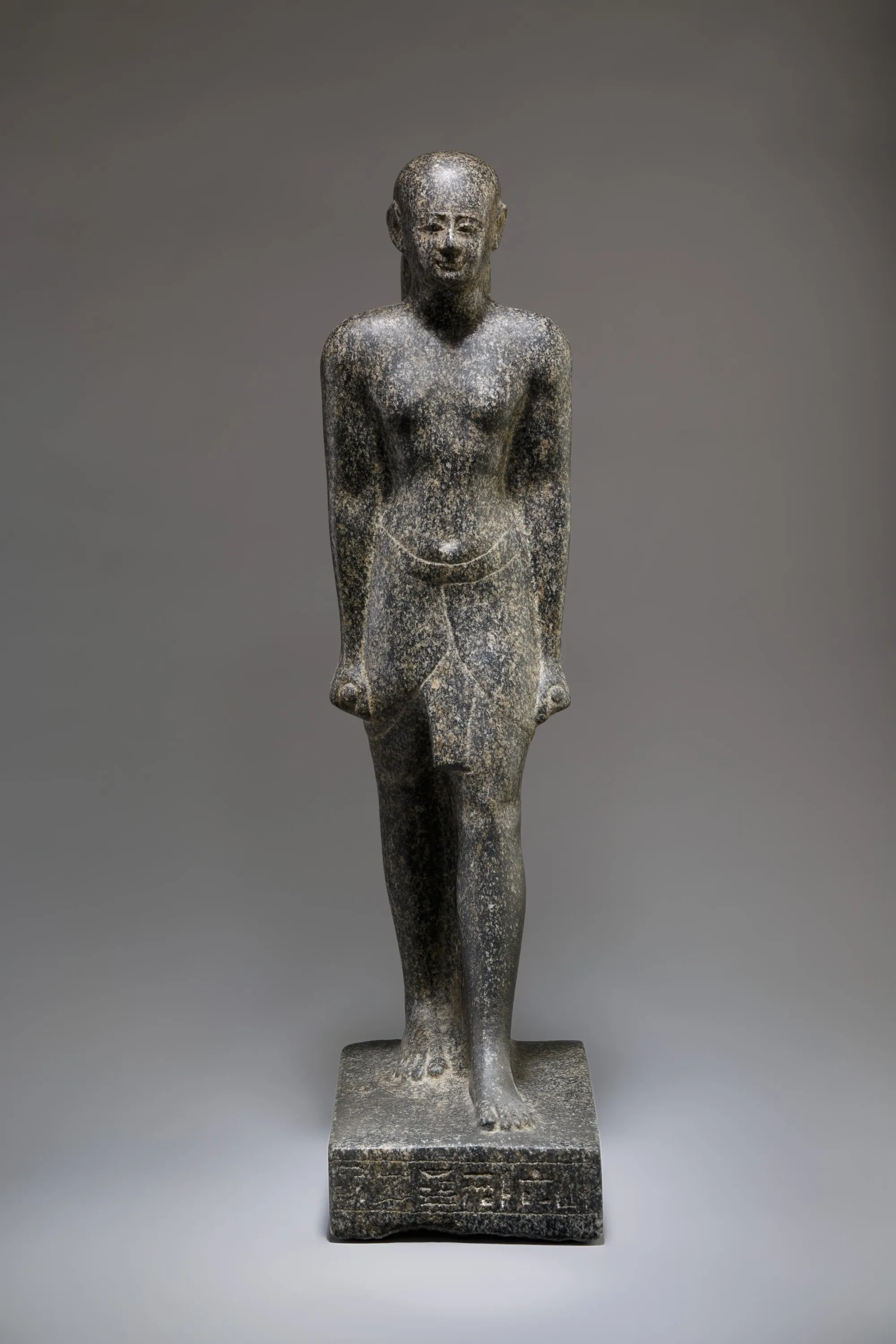
The priests were to set up an image of Ptolemy alongside the local temple's god. The translated decree describes the god giving the king a weapon of victory and asks that the images be made in Egyptian fashion. Royal honour would occupy a place within an existing religious arrangement.
A statue alone was insufficient. Priests were to attend the images three times a day and perform the customary services. A royal shrine was also to be placed among the other shrines and carried with them during major processions. The king's cult would share recurring acts through which a temple already expressed divine honour.
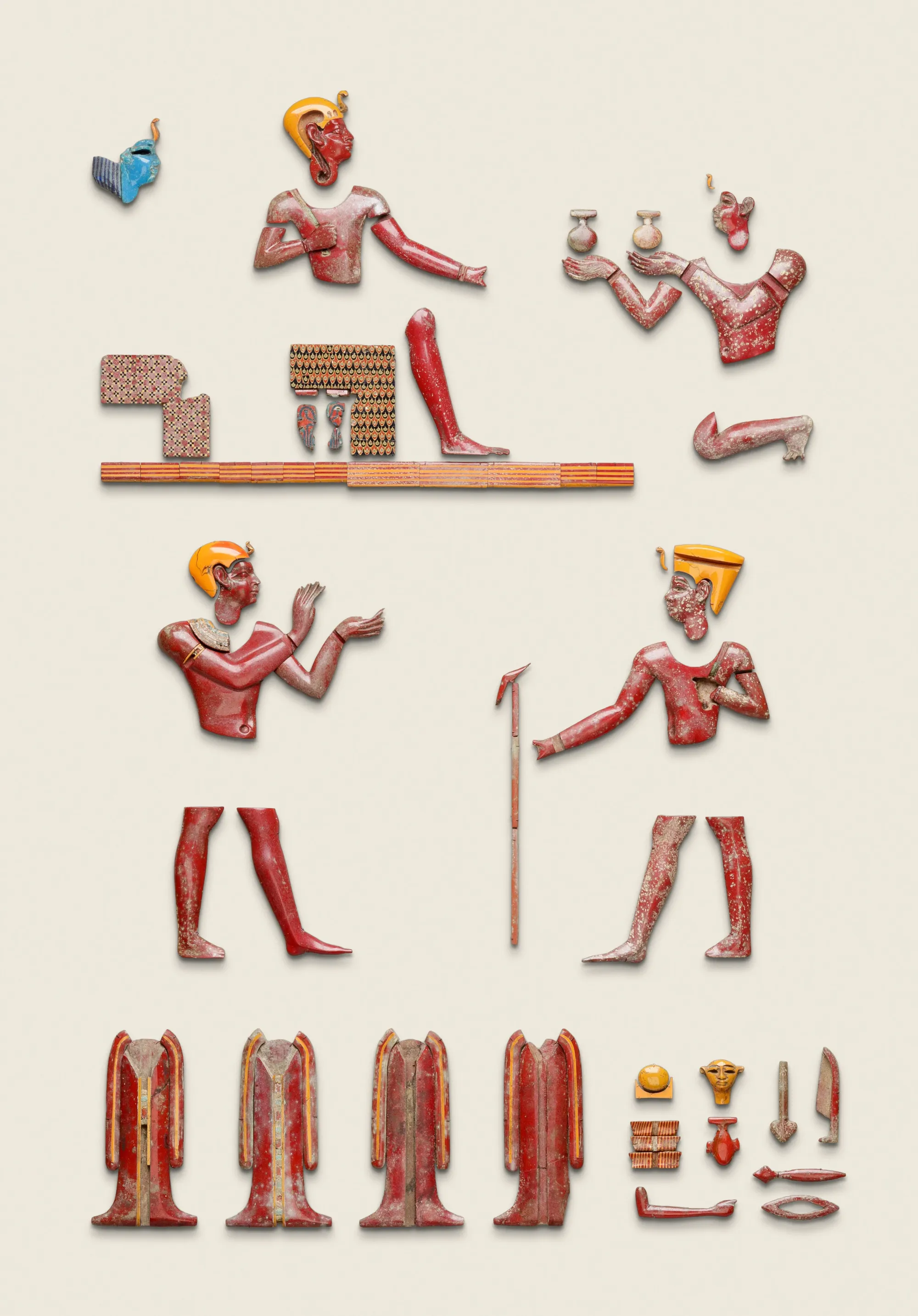
The calendar extended this repetition beyond the daily service. Days associated with the king's birth and accession were to be celebrated each month, and a five-day annual festival was prescribed as well, with offerings and ceremonies assigned to these occasions. Daily attendance, processions and recurring festivals gave the honour different places within temple life.
A statue, procession or festival could enter someone's experience without their deciphering an entire inscription. That possibility follows from the forms prescribed, although the orders cannot tell us how widely they were followed or how participants understood them. The provision for houses has a different force again. Private people who wished could make a likeness of the shrine and observe the celebrations at home. They were permitted to join in, rather than commanded to put a shrine in every household.
What the honours leave visible
The account of a generous king also contains violence. It praises the suppression of rebels and presents their defeat within its description of a ruler who protects Egypt and its temples. The same voice that records relief from obligations records punishment as an achievement.
Relief and punishment thus appear within one favourable portrait of kingship. That is the decree's representation of protection, which gives us neither the thoughts of the defeated nor the whole history of the conflict.
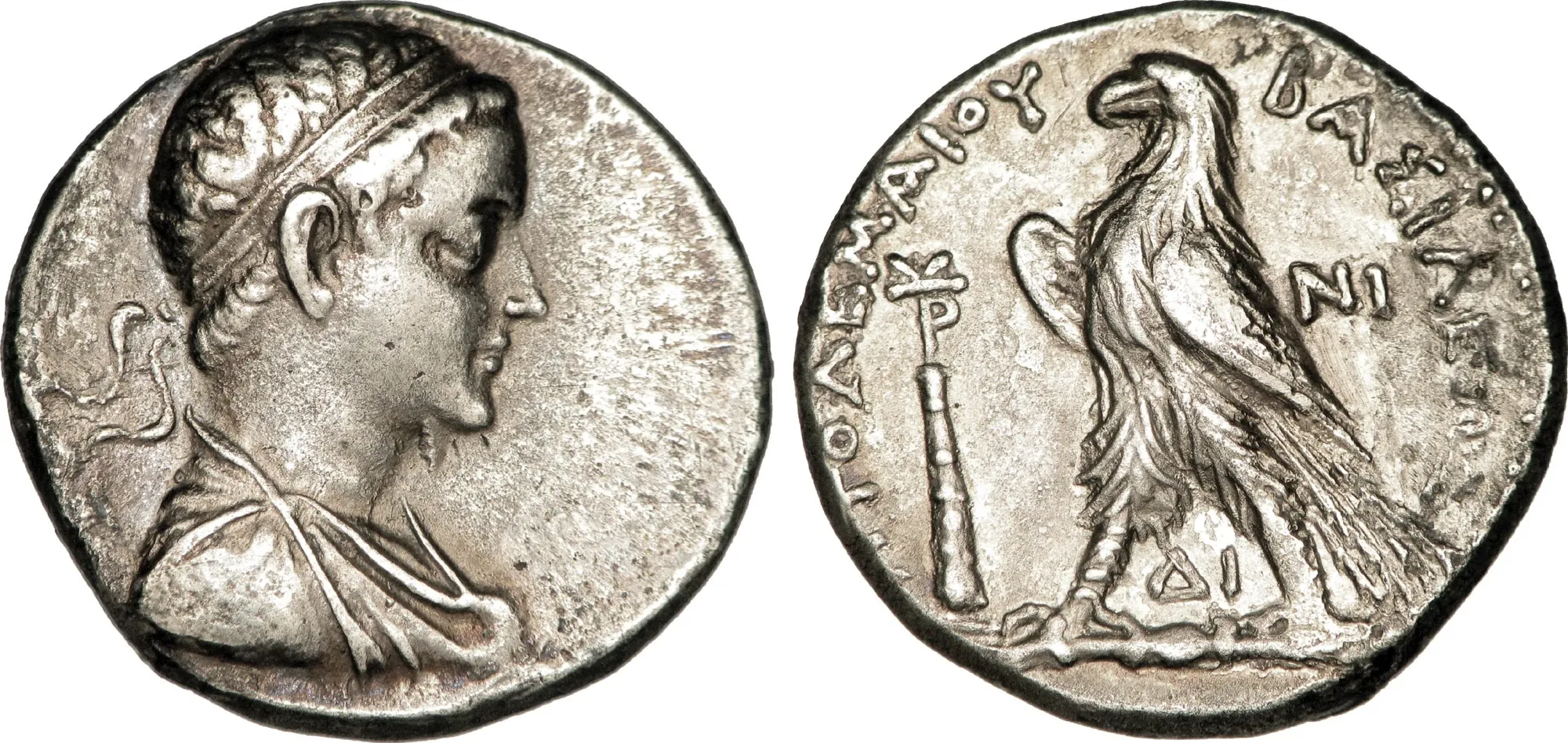
The intended repetition reached the priests' names for their own work. They were to add Ptolemy's priesthood to their other titles, write it on documents and engrave it on their rings. His honour would accompany an ordinary act of identifying a priest, long after the council's declaration had ended.