A ruler’s name survives on a piece of clay from Grat Be’al Gibri. According to archaeologist Iris Gerlach’s report, the impression names Rādiʾum; it was recovered from collapsed material in the building’s entrance area. It is the sort of find that makes the word “palace” seem quite natural.
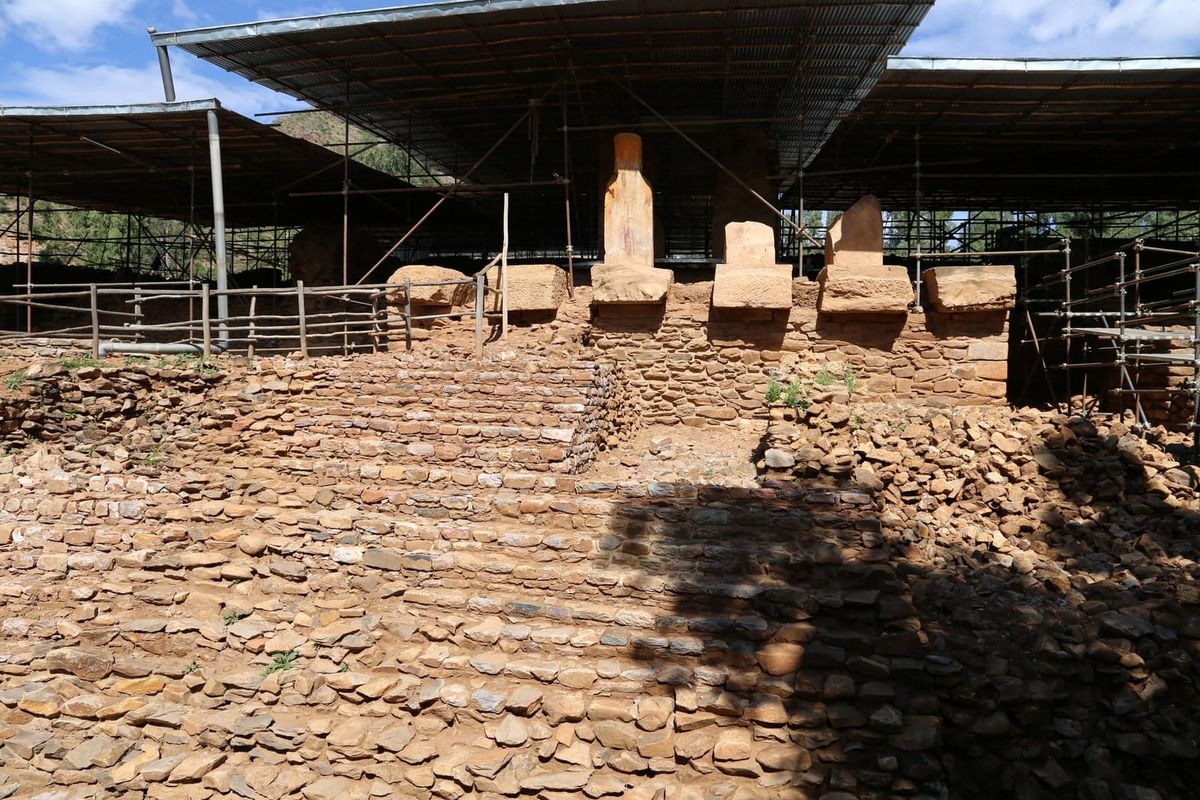
Grat Be’al Gibri stands at Yeha in northern Ethiopia, about 200 metres northwest of the Great Temple. Its construction dates to around 800 BCE. Gerlach and her colleagues in the Ethiopian–German Yeha project interpret it as an administrative centre and possible elite residence, with some rooms also serving religious purposes. That is a more complicated building than the name alone suggests.
The clay fragment helps explain the elite connection. To understand the proposed administration, we have to look at the rooms; to understand why the whole complex is not called a temple, at the arrangement of religious space. Whether a ruler actually lived there is another question again.
Rooms for keeping things
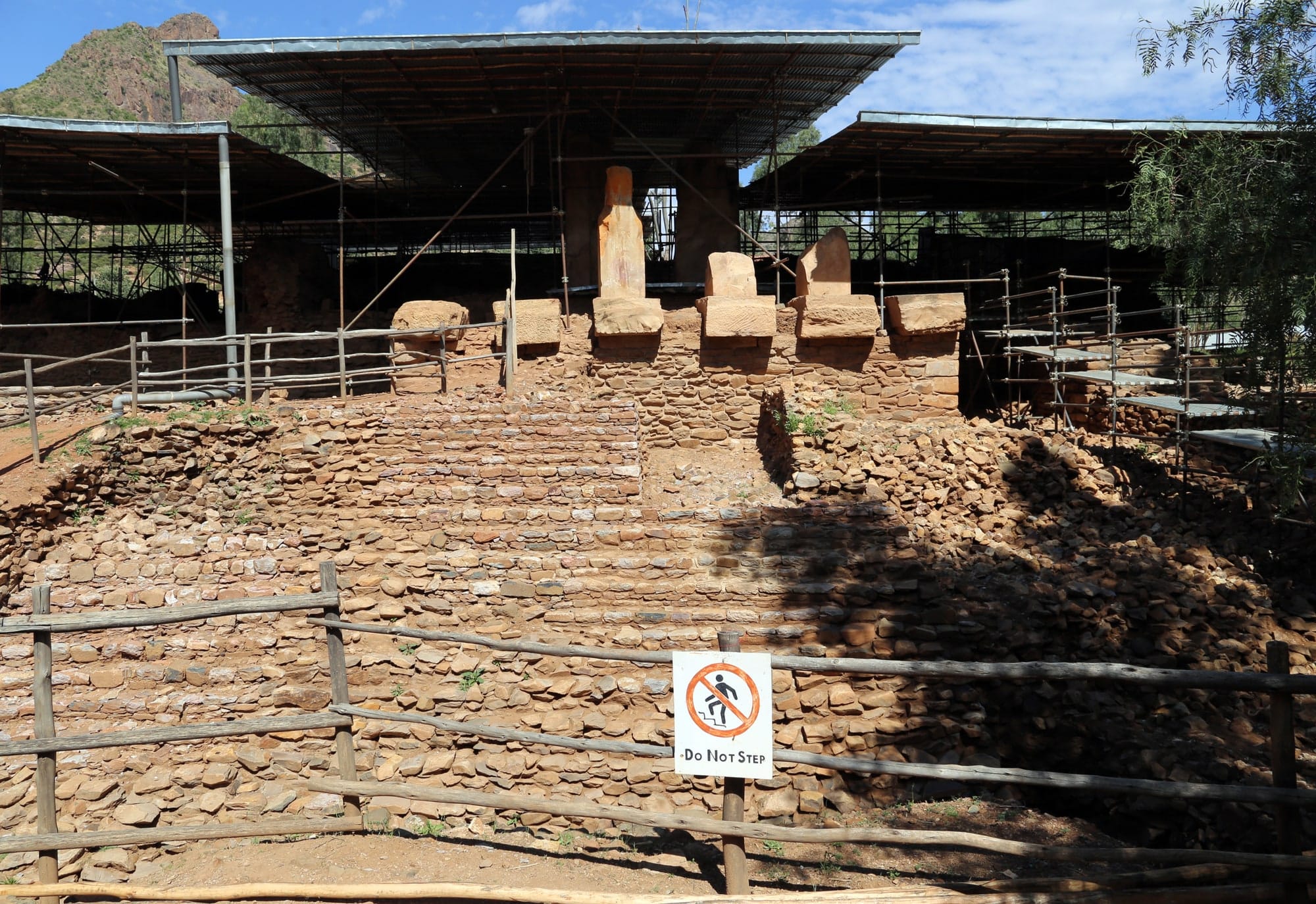
Grat Be’al Gibri had a central corridor with rooms along its sides. A corridor offers little help on its own: it describes how rooms are arranged, not what people did in them. More telling is the project’s interpretation of certain spaces as storerooms for valuable goods, their doors sealed to protect the contents.
Here the administrative reading becomes concrete. The interpretation concerns goods being kept somewhere and access to them being controlled. It gives a reason for considering these rooms together as part of a working complex, rather than treating the building’s size as sufficient evidence of its importance. Yet the account is not an inventory. It does not identify what was stored, where those goods came from, or who was responsible for them. Naming a treasury or describing officials collecting taxes would fill the rooms with details the evidence presented here does not supply.
The objects add a different kind of information. During excavations in the 1970s, a small seal associated with the ruler Waʿrān Haywat was found at Grat Be’al Gibri. Gerlach discusses it alongside the separate clay impression naming Rādiʾum. A seal is the object used to make a mark; an impression is the mark left behind. These finds should not be imagined as a stamp and its matching imprint. They carry different names and have their own archaeological contexts.
The Rādiʾum impression came from entrance collapse, not from a documented position still attached to a storeroom door. So although sealed storage and the named impression both belong in the account of Grat Be’al Gibri, we cannot join them into an incident in which this ruler secured a particular room. The name gives the building an elite association without identifying the person who pressed the seal into clay, or establishing whether the impression was connected with stored goods at all.
Gerlach suggests that the named finds could point to elite residence. The possibility is worth retaining. It is also more specific than either administration or an association with rulers: to call the building someone’s home is to say something about occupation that a named object, by itself, cannot establish.
What the neighbouring temple shows
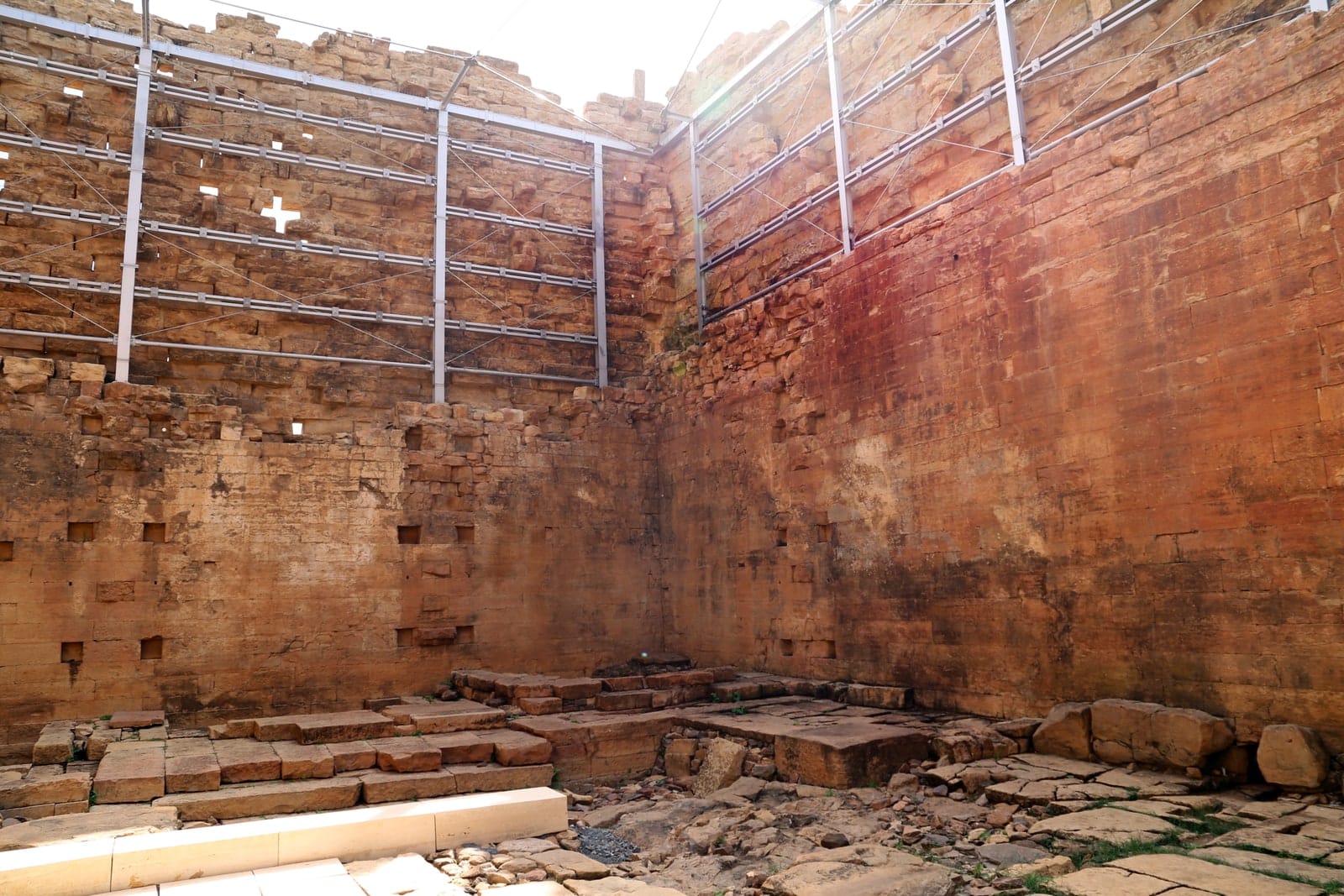
The Great Temple offers a useful comparison, though it belongs to a later date. The project places it in the middle of the seventh century BCE, after the construction of Grat Be’al Gibri. The two buildings therefore should not be pictured as a palace and temple designed together in a single undertaking.
In the reconstructed temple interior, three rooms lie at the rear, with the central room forming a holy place. Altars are inferred from surviving traces and foundations. These are not descriptions of an intact furnished sanctuary, but they allow the researchers to propose a religious focus within the building. The arrangement draws the comparison beyond the fact that both monuments were imposing structures.
No equally clear central sanctuary or fixed altars have been documented in Grat Be’al Gibri. Its corridor and adjoining rooms do not reproduce the temple’s reconstructed arrangement. This difference supports the excavators’ decision not to classify the whole complex as another temple; the storage interpretation supplies a positive explanation of its use.
The word “whole” matters here. Miniature vessels, small incense burners and remains interpreted as a possible cult image were also found at Grat Be’al Gibri. The project allows for religious activity in particular rooms. Calling the complex administrative does not require those objects to disappear from the account, nor does the absence of an identified central sanctuary make it a wholly nonreligious place.
The objects and their surroundings
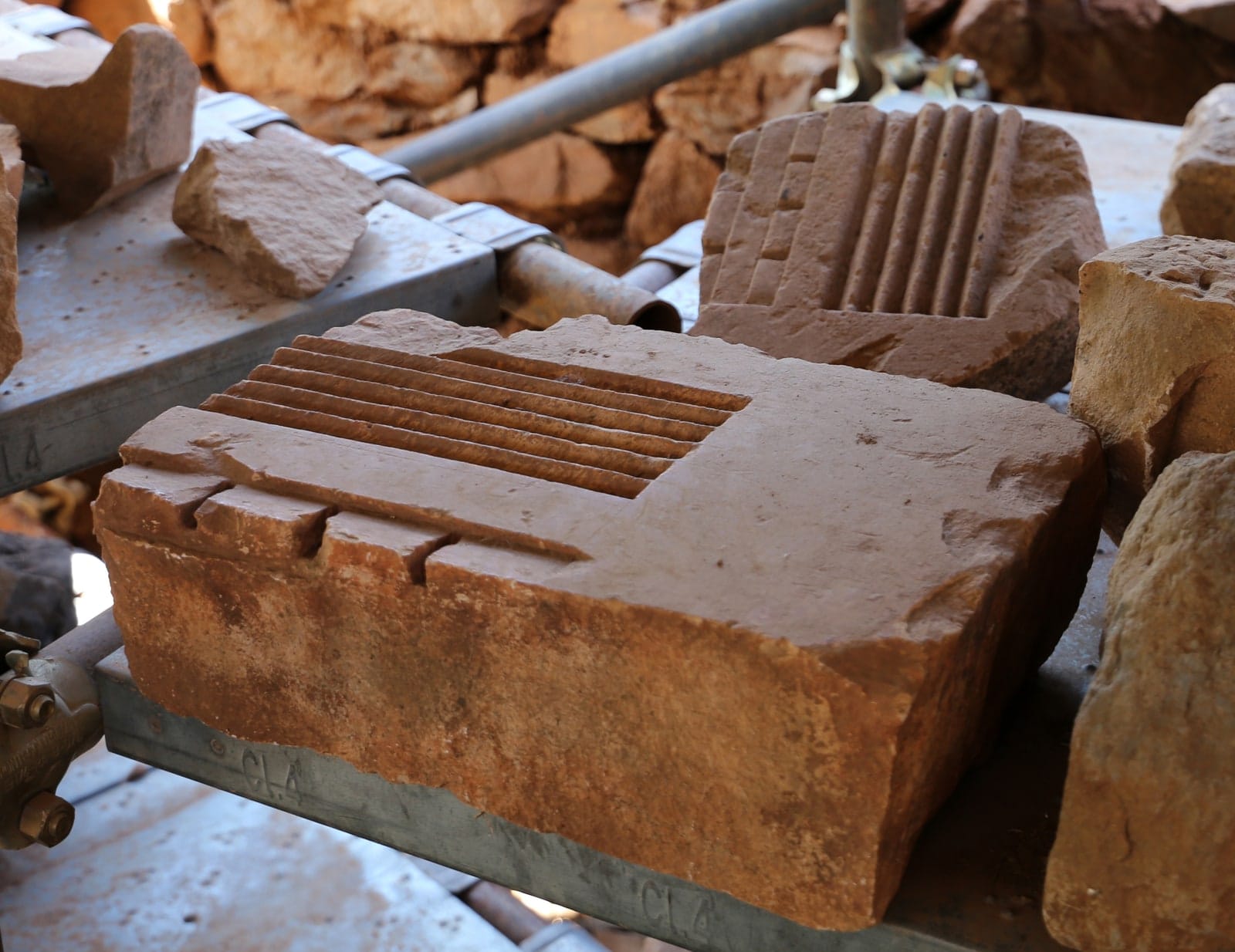
At Yeha, a seal also occurs in a very different setting. A German Archaeological Institute report on museum work in autumn 2022 records material from tombs excavated in 1960. Among that separate assemblage are miniature vessels and a bronze stamp seal decorated with an ibex. These are grave finds, not additions to the palace inventory.
The bronze seal’s burial context tells us where it ended up, without recovering everything it had been used for beforehand. It also makes a useful limit visible: finding a seal cannot automatically turn its surroundings into an administrative office. At Grat Be’al Gibri, the argument depends on the building and its interpreted storage as well as the objects. The same care applies to the incense burners. They help identify religious activity, but do not settle the purpose of every room around them.
“Palace,” then, need not mean a royal household whose occupants can now be named. In Gerlach and the project’s interpretation, it describes a complex associated with elites, used for administration and possibly residence, which could also accommodate ritual.
Return to the fragment recovered from the collapsed entrance area. Rādiʾum’s name now sits within an account of rooms, protected storage and religious activity, rather than serving as a ready-made answer to whose palace this was. The excavators can propose what sort of place Grat Be’al Gibri was. The impression still does not tell us whether the person it names lived there.