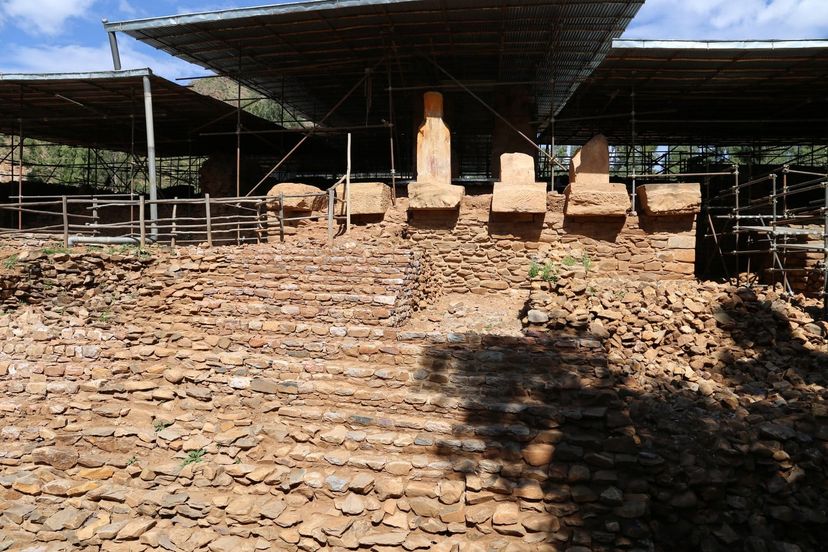
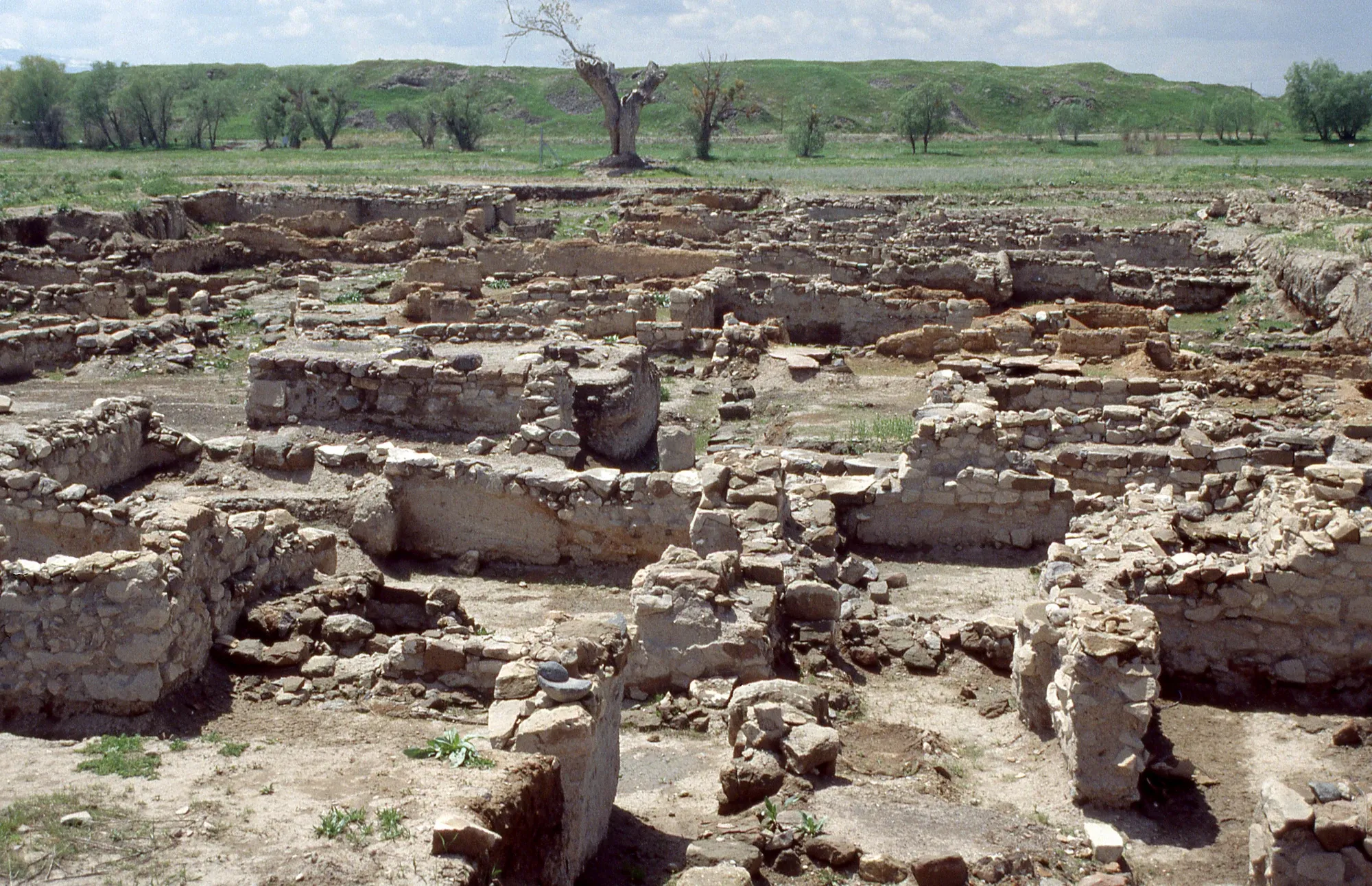
In the lower town of Kanesh, nearly four thousand years ago, merchants kept goods and business records in the houses where they lived. Historian Cécile Michel describes the typical house as having three or four rooms and an upper floor, with some rooms used to store merchandise. A private archive could be kept alongside valuables in a sealed or guarded room. Records sometimes accumulated across generations when a son added his own documents to those left by his father. A few archives contained material from three generations.
Kanesh lay in central Anatolia, at the site now called Kültepe near Kayseri in Turkey. Its traders were connected with Assur, on the Tigris in what is now Iraq. Tin and textiles came from Assur to be sold for silver and gold in Anatolia. Many traders retained a family house and records in Assur even while working elsewhere. Wives, relatives, and representatives there looked after their affairs and corresponded with them. Other families lived together in Kanesh, where wives wrote to husbands who were travelling elsewhere.
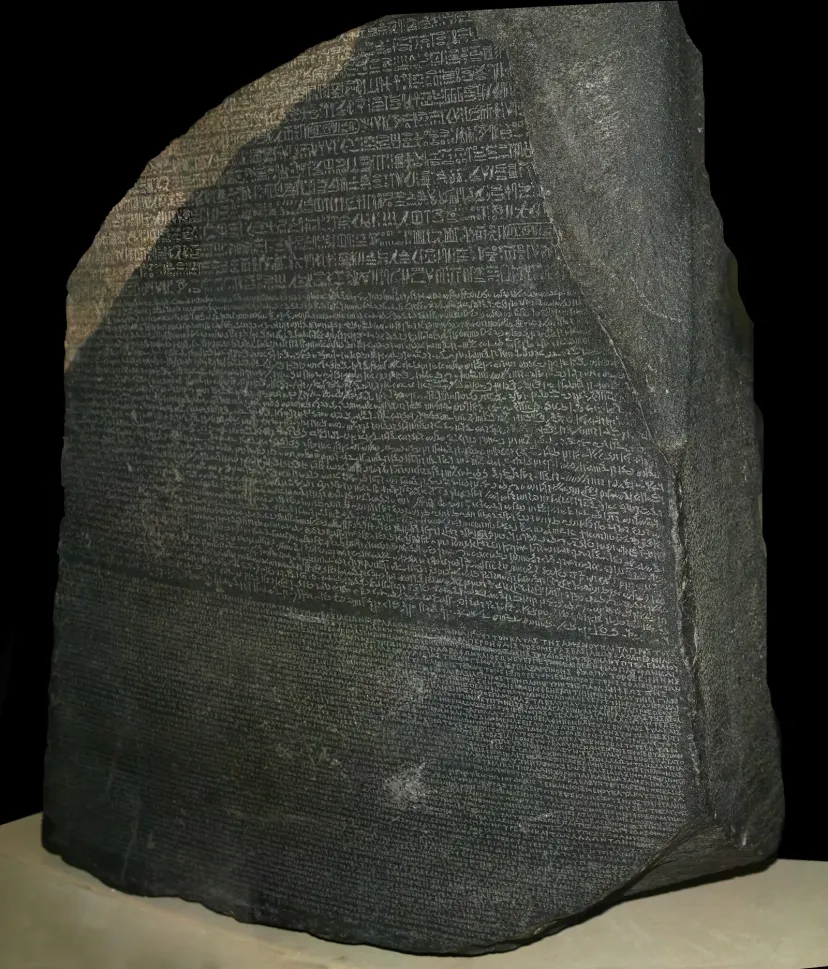
A lot of the clay-tablet evidence excavated at Kanesh dates to the nineteenth century BCE. Alongside correspondence from this Old Assyrian merchant world are records of purchases, debts, and household arrangements. The buildings that sheltered people and their records could themselves be bought or divided among heirs. Some agreements also reserved a place for someone whose claim was to live in a house that belonged to another person.

For Musa, that permission was to last “as long as she lives”, in Michel’s translation. Her house belonged to Ashur-malik, son of Puzur-Ishtar. The tablet identifies her through her father and husband, without explaining her relationship to the owner or naming the city where the house stood. The merchants’ houses excavated at Kanesh provide wider context, not an identified home for Musa.
The lifetime term is clearer than the restrictions on disposal. Scholars disagree over whether a prohibition concerns household objects alone or includes the house and its doors, and over whether its final action means pledging. In the broader reading followed by Michel, Musa was forbidden to sell the building or pledge it as security for a debt, with listed parts and belongings covered too. Selling would transfer the property to someone else. Pledging would instead make it security for a loan, putting the building at risk if the debt went unpaid.
Another difficult passage names Ashur-malik’s sons alongside him, though they are not identified as present owners. On Michel’s reading, neither they nor their father were to expel Musa if she became disabled. This is a condition contemplated by the agreement, not a report that she became disabled. Alternative readings include a possible reference to burial.
A sale that left someone in place
Ikuppiya bought Ababa’s house for two minas of silver, with a provision for a woman whose surviving name begins Gamu. She was to inhabit the house for life, and nobody was to expel her. Her age, marital status, and relationship to the buyer and seller are unknown.
The price was expressed by weight. A mina was about half a kilogram in the Assyrian system. Silver circulated as ingots, rings, and smaller pieces, with the amount of metal recorded in transactions. Balance weights have been found in Kanesh’s houses and workshops. Merchants used private weights as well as official standards held by institutions in Kanesh and Assur.

After identifying the house as Ikuppiya’s, the tablet also calls it Gamu’s for her lifetime. The two descriptions accompany different provisions within the same sale, one for his acquisition of the building and the other for her continuing place in it. Inside, things were to remain too. Michel’s translation of a partly restored clause prohibits taking out household goods, a chair, a table, and other things. The damaged list is not a secure inventory of Gamu’s own possessions.
The promise against expulsion was followed by terms for its violation. The fuller wording on the tablet, rather than the abbreviated version on the clay envelope enclosing it, explicitly places breach and expulsion before compensation. As Assyriologist Klaas Veenhof translates the sequence, if the agreement was broken and Gamu was expelled, she was to receive one mina of silver, and only then leave. Under that reading, payment would follow a broken promise rather than buy advance permission to remove her.
The mina due after a breach was half what Ikuppiya had paid for the house. No replacement home was specified, and the comparison tells us neither what another dwelling would have cost Gamu nor how long the silver might have supported her. Nor does the assembled evidence identify a linked later record of her being expelled or paid. Musa’s subsequent residence is likewise untraced here. These are limits of the material brought together, not a finding that no further record could exist.
The writing behind a house claim
A sale could leave behind a record of more than the new owner’s title. Gamu’s agreement placed her lifetime residence and the restrictions on removing household contents alongside Ikuppiya’s purchase. Buyers retained deeds as titles to their houses, Michel explains, and when a house was sold again, an earlier deed could pass to the next purchaser. The writing might also preserve the seller’s acknowledgment of receipt. Veenhof describes a sale-contract form stating that the full price had been received and the seller was satisfied. A later purchaser could keep the older deed, including the earlier seller’s acknowledgment, alongside the record of the new purchase.

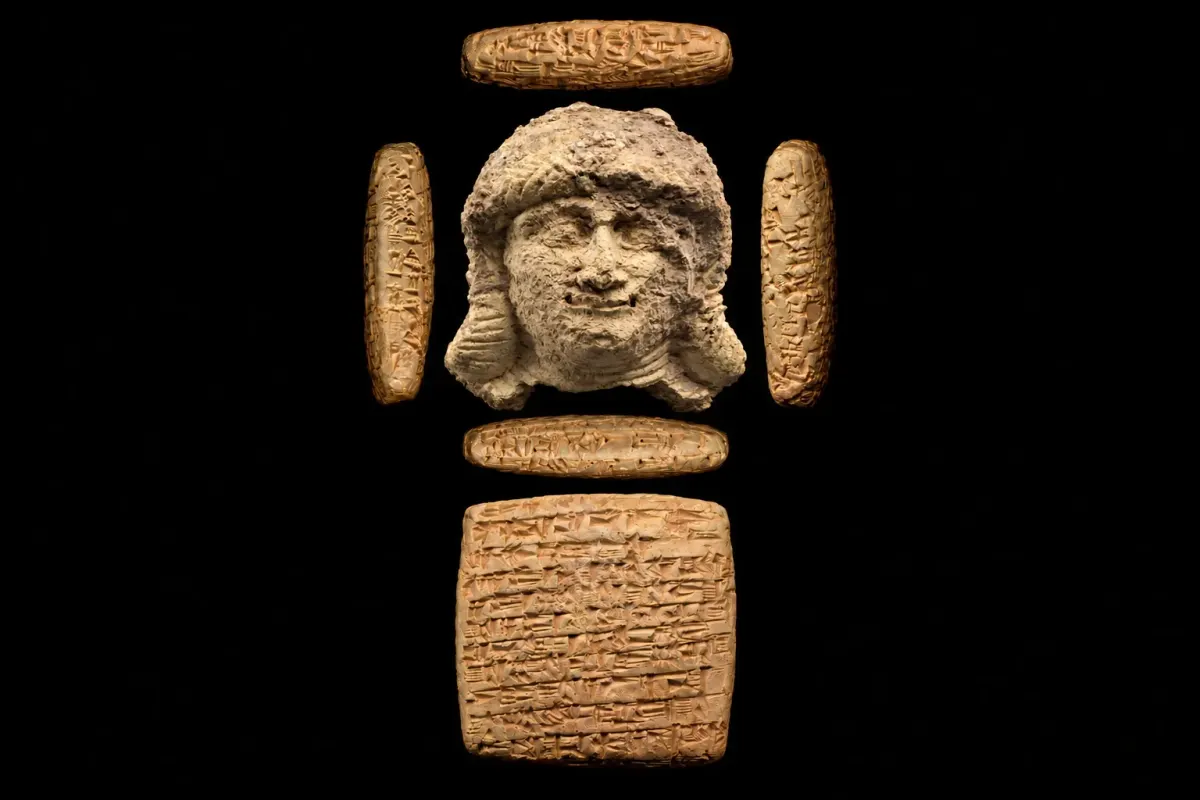
An unbaked tablet could be moistened and its text changed, which helps explain the sealed envelopes Michel connects with legal documents’ validity. Parties and witnesses impressed their seals on the cover. Its outer writing usually repeated the enclosed terms and began with the names of the people who had sealed it. The impressions themselves did not always carry writing, but family members and colleagues could recognize seals used by people they knew. The arrangement kept the terms available to be read while the sealed cover remained intact.
Private collections also held testimony, arbitration records, and verdicts. Documents concerning a person or an affair could be grouped together rather than separated merely by their form. The use of several kinds of evidence is visible in a separate proceeding before Assur’s City Assembly concerning two women’s income from a house. It involved none of the women whose agreements are discussed here. In the order published by Veenhof, heirs of two families were to come to Assur to negotiate an arrangement. A previous verdict, a deed of sale, and a record of revenues were to be sealed by the ruler and deposited in the City Office—making written evidence available for the negotiations, in Veenhof’s interpretation. The order does not record their outcome.

The woman who paid
A payment clause could also resolve whose purchase was being recorded when one woman acted for another. In a transaction that Michel discusses among purchases in Kanesh’s lower town, Umminara supplied the silver and Shuishkana bought the house on her behalf. The agreement assigned ownership to Umminara because she had provided the money, and barred Shuishkana from claiming the house as her own.
Shuishkana was nevertheless allowed to continue living there as before. Michel says the women’s relationship is unknown. Unlike Musa’s and Gamu’s provisions, this passage gives Shuishkana no explicit lifetime term. There is no rent clause either, leaving open whether rent was paid.
A house with expenses attached
A place to remain did not settle who would meet a resident’s other needs. After their father’s death, Puzur’s sons, Iddin-Ishtar and Ilabrat-bani, made an agreement assigning the house in Kanesh and its household goods to Iddin-Ishtar. Ilabrat-bani had no claim to either. Both brothers remained responsible for their father’s debt. Their mother’s expenses and debts, and responsibility for her burial, fell to Iddin-Ishtar alone.
Ordinary expenditure was one charge and sums Puzur owed were another, while her burial added a commitment beyond her lifetime. Veenhof considers it probable that she lived in the house, although the agreement gives her no explicit lifetime residence grant. Whether Iddin-Ishtar actually met the costs or provided care remains unestablished.
These are the sons’ terms, not their father’s surviving will. They are published from the writing on a clay envelope whose enclosed tablet had not been opened when the text was published. As with the general envelope practice described above, the outer writing made the agreement accessible without opening it, although the exact wording still inside was not established.
The brothers also anticipated a later distribution of property in Assur. Traders could retain a family home and records in Assur while conducting business in Anatolia. After a trader’s death, Veenhof explains, evidence of his assets and debts had to be collected there for a settlement among heirs, debtors, and creditors.

Money still owed to the trader represented a claim for the estate, while his own unpaid debts were claims upon it. In the brothers’ agreement, the father’s debt had already been assigned jointly even though only one son received the Kanesh house.
The later settlement in Assur is not recorded as having taken place, but the agreement specifies that the house in Kanesh was to remain outside it. Veenhof interprets that house and its contents as an additional share connected with taking care of the mother. The son assigned Puzur’s expenses, debts, and burial was also assigned property his brother could not claim in the distribution still to come.
Sources and further reading
This article draws on published translations and scholarly discussions. The sources distinguish the wording of the agreements from interpretations of damaged or uncertain passages; they do not establish what happened to the women afterward.
- The agreements. Cécile Michel, Women of Assur and Kanesh: Texts from the Archives of Assyrian Merchants (2020): text 51, pp. 107–108 (Musa); text 52, pp. 108–109 (Gamu[…]); text 150, pp. 242–243 (Umminara and Shuishkana); and text 49 (Puzur’s sons). For houses and women’s property, see also Michel, “Women and Real Estate in the Old Assyrian Texts”, Orient 51 (2016), pp. 83–94, especially pp. 83–84 and 87.
- Musa’s disputed clauses. Veysel Donbaz, “paššurum (table) or gušūrum (beam)?”, N.A.B.U. 2015/66, p. 106; and Klaas R. Veenhof, “The Old Assyrian contract H.K. 1005-5534”, N.A.B.U. 2017/8, pp. 16–17. These discuss the property restrictions and the unresolved disability/burial reading.
- Houses and archives. Veenhof, “The Archives of Old Assyrian Traders: Their Nature, Functions and Use” (2013), pp. 27–28; reprinted in Law and Trade in Ancient Mesopotamia and Anatolia (2020), pp. 83–84. Michel, “Constitution, Contents, Filing and Use of Private Archives: The Case of Old Assyrian Archives (nineteenth century BCE)” (2018), pp. 54–55 and 63–65, explains envelopes, deeds and filing.
- Silver and weights. Luca Peyronel, “Weighing Silver on the Scales: An Overview of Silver Hoards and Balance Weights during the Middle Bronze Age (ca. 2000–1600 BC) in the Near East” (2019), pp. 74–75.
- Compensation and documentary evidence. Veenhof, “A Verdict of the City Assembly of Assur (Kt 92/k 491)”, JEOL 45 (2014–2015), pp. 109, 119–121, including notes 48–49.
- Puzur and the estate. Veenhof, “Old Assyrian and Ancient Anatolian Evidence for the Care of the Elderly”, reprinted in Law and Trade (2020), pp. 198–199; Jacob Jan de Ridder, “Testaments and Division of Assyrian Estates in the Second Millennium BC” (2017), p. 71.