In 11th-century Egypt, Yaḥyā ibn al-Ḥasan asked a lady to release 70 large sacks of wheat. The same lady is also the one who received the petition from the mosque about income. Neither of the petitions refers to her by name. Marina Rustow identifies her as Sitt al-Mulk, a princess of the Fatimid dynasty, which then ruled Egypt. The wheat petition refers to her as "our mistress the lady" in Rustow's translation and contains a blessing which links her power to the continued life of the caliph al-Ẓāhir. Rustow makes the identification on the basis of the titles, the institutional links and the dates.
Yahya said food was difficult to get, as was fodder for his donkey. He had given his son 100 dinars and sent him off to Madinat al-Fayyum to buy some wheat or barley. Yahya reported that his son bought 70 sacks of wheat and delivered them to Emir Abū Muḥammad al-Ḥasan ibn Thiqat al-Dawla. The terms of the delivery are not clear. Rustow considers a number of possibilities: that it was a voluntary delivery, that it was simply confiscated, or that it was an official requisition. She does not pick any one of them. By the time Yahya made his request, he wanted someone to intervene so that the sacks could be released at Giza (the Nile port for Fatimid Cairo).
The woman was to send a eunuch to get the district governor's decree authorising the release. The money had been spent already and the son had purchased the wheat, but the household still needed the governor's decree before they could get the grain. Yaḥyā's plan hinged on the woman's ability to get someone else to do the thing.
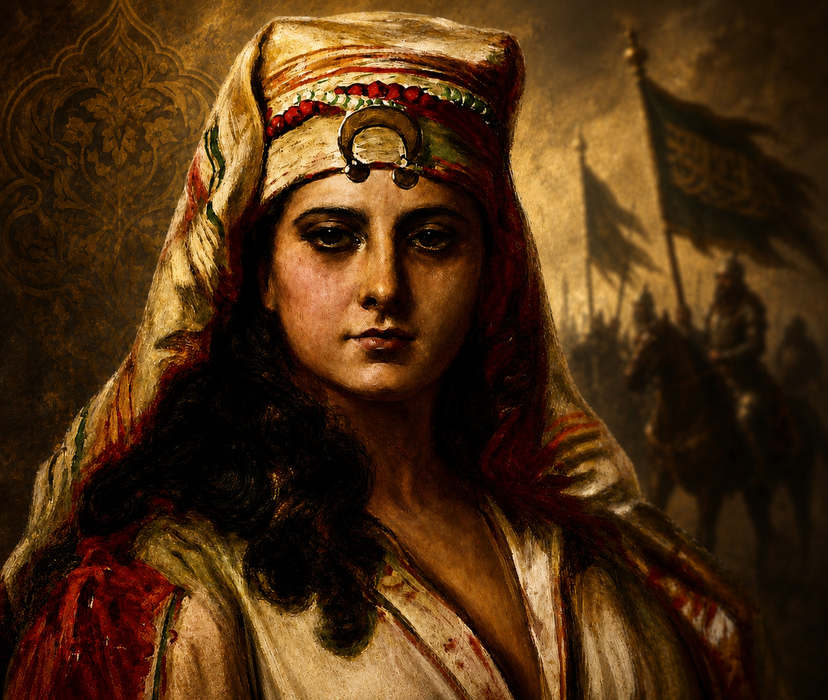
Sitt al-Mulk was al-Ẓāhir's aunt and half-sister of his predecessor al-Ḥākim, who in 1013 had named a cousin as his heir. Cortese notes that at around the same time she was providing refuge in her palace for the caliph's son (the future al-Ẓāhir) and his mother. After al-Ḥākim disappeared in 1021, she was a very significant figure in the securing of her nephew's succession. Cortese points out in her study of Sitt al-Mulk's relationships with the army that she secured the army’s support through money, gifts and favours. Other royal women might have had vastly more personal wealth and still not have the same influence. Cortese makes the link between the princess's position and the issue of succession and the advantages which the various military groups could derive from supporting a member of the dynasty.
Her resources also brought her into contact with people whose work was a bit removed from the court. Yaacov Lev details her economic interests in Egypt and Syria and the financial and administrative staff who were employed by her there. Early in al-Ḥākim's independent reign, Lev notes that her land grants were producing 100,000 dinars a year. A Christian tax collector in Syria working for Sitt al-Mulk informed her of a financial officer in Ramla in Palestine who was extorting money from the tax collectors and the other financial staff. She passed that on to her brother. That incident is from the period prior to the petitions that we have surviving, when she could simply pass such a report on to her brother, the reigning caliph al-Ḥākim.
These links will go some way to explaining the nature of the intervention Yaḥyā was seeking. His appeal is in the form of a submission, placing him in a subordinate position to the woman before he goes on to talk about his money. His name is preceded by the phrase which Rustow translates as "her slave" (a formula of submission rather than one of actual slavery or personal relationship). His son is described in the language of service and the appeal is extended to the household servants. To leave the grain unreleased would be to waste his son's labour and to leave them in a state of dependency. His request is a laudation of her generosity and he presents the very idea of helping the household as precisely the sort of thing she would do.
Someone else may have been the one to put Yaḥyā's complaint in the right form. Rustow's work on the drafts, the handwriting and the layout suggests that there was a clear understanding of where to put the claimant's name, how to address the recipient and how to state the request. One of the later petitions shows a number of stages in its development. The early drafts were predominantly in Arabic but in Hebrew script. The final draft, in Arabic script, was the work of a different and more experienced hand with the blessings and the sender's heading in the top left-hand corner. The script may have changed, but the language could have remained the same. One person may have been writing the account and another the draft for submission. The same kind of co-operation may have occurred in the case of the two petitions to the woman, though we do not know who wrote them or how they were drafted. The claimant's name will of course identify the person making the appeal, but it does not tell us whose words we are reading.
The two petitions to the woman are very different in handwriting and in their presentation. Yaḥyā's name is in the normal position; the grain sheet uses older forms of script and is very much less conventional in its spacing and layout. Rustow describes the mosque petition as being in the standard "official" style of the capital, with the lines very widely spaced and the lines rising at the ends, the words simply stacked into the space that remains. Rustow suggests that the differences in the grain sheet may be the work of a writer who was not in Cairo. A petitioner might well have had a request drafted for them without actually going to court. We do not know who the writer was in either instance and the space for Yaḥyā's district is left blank. There is a destination for the grain where there is no address for the claimant at all.

The document could have been used in the place of the absent petitioner (a fairly common thing to do in the Fatimid period). In that case it would have had to contain both the explanation and the appropriate degree of deference. Neither of the requests suggests that there was in fact a personal audience with the woman.
The second petition is about an institution rather than a household. This appeal (Rustow dates it to 1022–23) is from an unnamed man on the basis of a complaint from his deputy Mūsā ibn Azhar. Mūsā was a preacher and the income from the mosque’s foundations was to go towards the upkeep of the preacher and the other needs of the institution. Some ten dinars were due. The tenants are also said to want to put off their payments and to dissolve the foundation. We only know the name of the deputy; the petition is in the voice of an unnamed man asking the woman to help Mūsā and we have no idea where Mūsā originally made the complaint.
The rent was all committed. Each year a certain proportion was set aside for the cost of preaching, the balance going to maintenance, the superintendent and the muezzin (the man who calls the worshippers to prayer). Rustow would have us believe that the petitioner in question was probably the chief preacher. On that reading he is reporting the difficulty of his deputy in the course of an appeal about an arrangement which would in fact support his own office. What Mūsā could collect would go some way towards making that arrangement work.
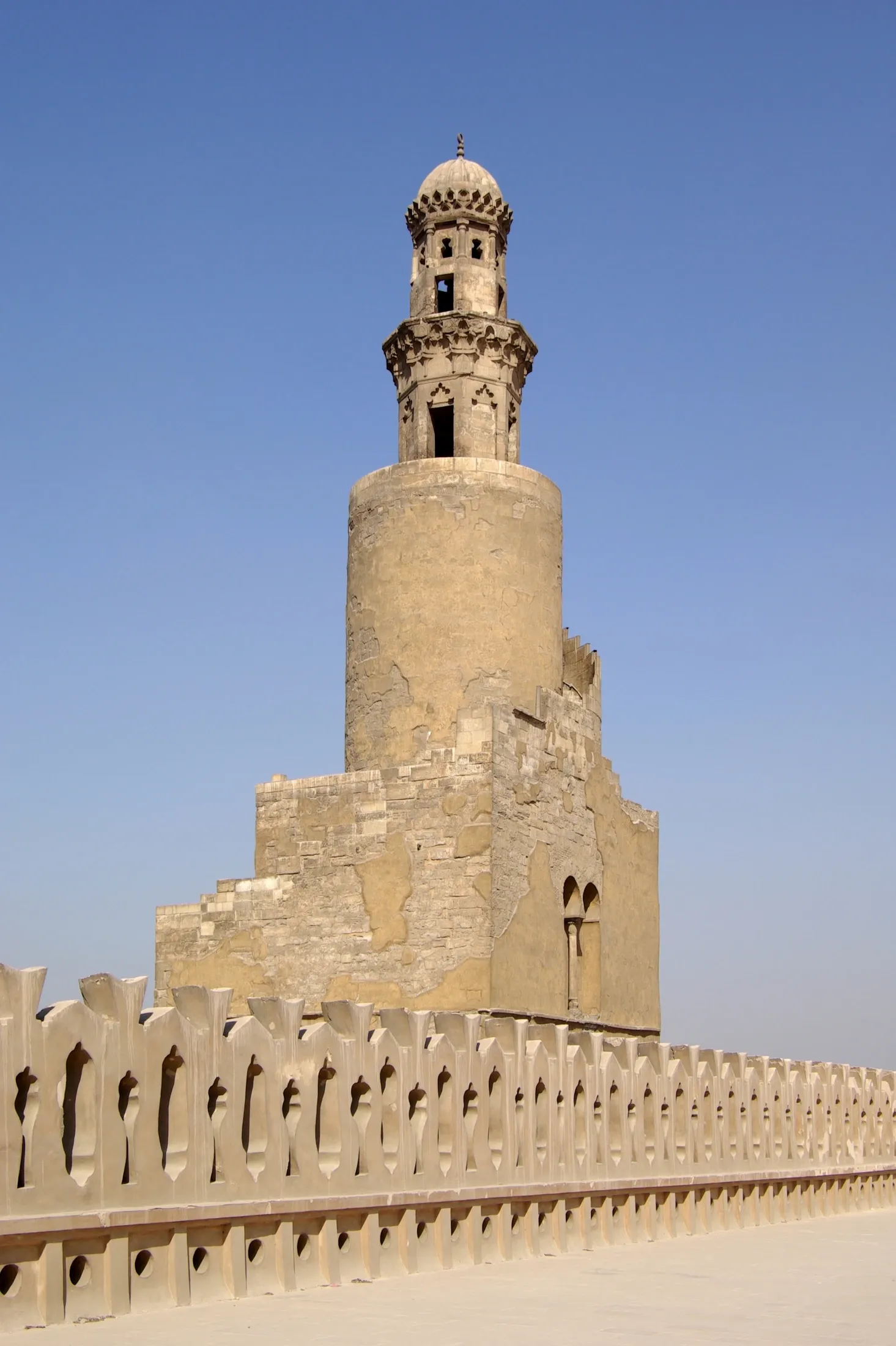
The preaching allocation was also intended to sustain the Ismaili da'wa (religious mission). The Fatimids were Ismaili Shias and their caliphs claimed descent from Fatima (daughter of the Prophet Muhammad) and her husband 'Ali. Their followers accepted them as imams (both spiritual and political leaders) and their claim to leadership was directly in opposition to that of the Abbasid caliphs. Teaching the faith was therefore an essential element in the maintenance of a claim to authority which was not restricted to the borders of Egypt.
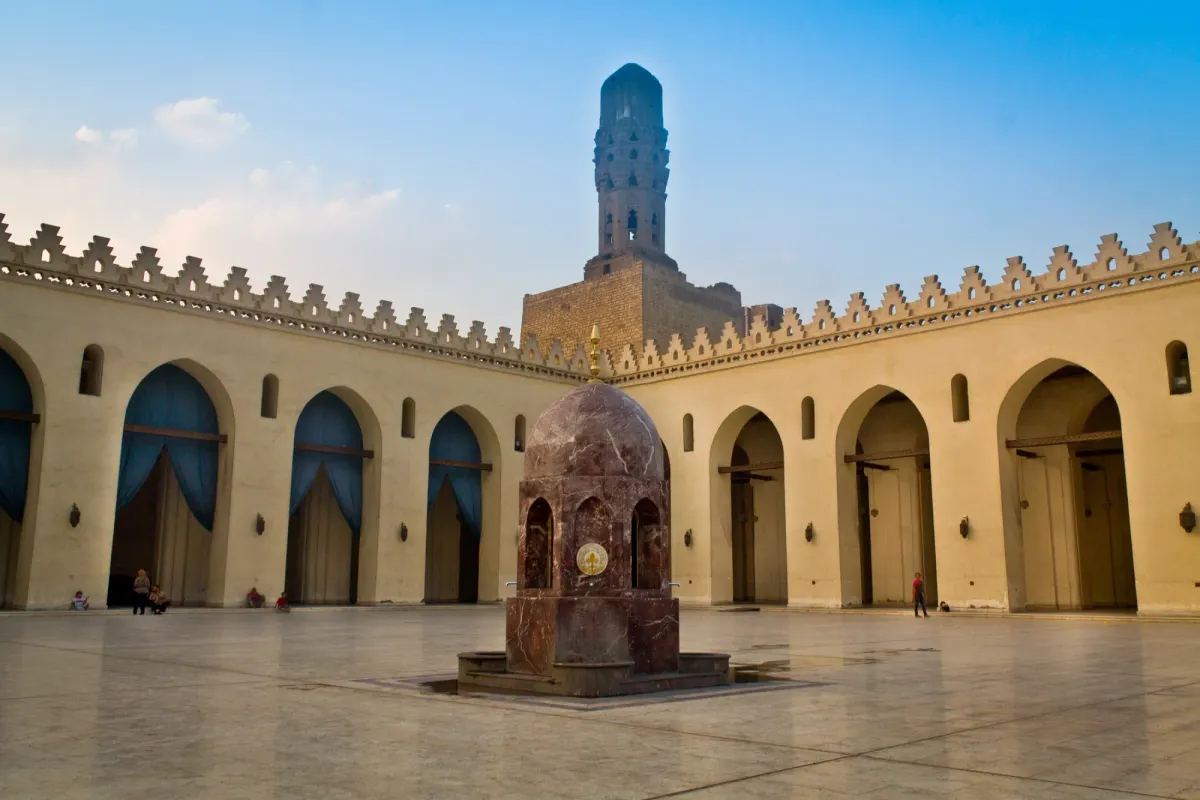
The petitioner says the mosque is in the woman's dīwān (bureau). He is drawing on an existing administrative relationship in that he is asking her to help with the income. If Rustow's identification of the recipient is correct, then he is also addressing a member of the ruling family whose religious mission the preacher was to be the one to carry out. There is a precedent for royal support of a mosque in the family of Sitt al-Mulk. Her grandmother Durzan built the Qarafa mosque outside Cairo in 976, very shortly after her son had become caliph. The mosque with the deferred rents is unnamed, so we cannot identify that as the one in question.
The petitioner asked for the governor and the officer in charge of the district in which the mosque was situated to help Mūsā. He was seeking a decree directing them to assist his deputy in the collection of rent and in the protection of the foundation, its property and its maintenance. The decree he was asking for was to cover both past and future rent, so that the officials would be under a duty to assist in respect of the shortfall of ten dinars as well as any future shortfall.
Before he puts forward Mūsā's complaint, he asks that her power be preserved and her enemies destroyed. He speaks of gratitude and of the reward from God for her good deeds. At the end, after stating what he wants for the deputy and the foundation, he connects that with a great deal of prayer for her.
References
- Bodleian Libraries. MS heb. b 18/23. Arabic petition. Edited and translated into English by Marina Rustow. Princeton Geniza Project, document 39034. Document record and translation.
- Cortese, Delia. A Patron of Men: Sitt al-Mulk and the Military at the Fatimid Court. In Guerre et paix dans le Proche-Orient médiéval (Xe–XVe siècle), edited by Mathieu Eychenne, Stéphane Pradines and Abbès Zouache, 217–234. Textes arabes et études islamiques 54. Cairo: Institut français d’archéologie orientale, 2019. Accepted manuscript · Publisher’s contents.
- Daftary, Farhad. Fatimids. Encyclopaedia Iranica, 1999. Reproduced by the Institute of Ismaili Studies, 2006. Article · PDF.
- Jewish Theological Seminary Library. ENA 3974.3. Arabic petition. Edited and translated into English by Marina Rustow. Princeton Geniza Project, document 19304. Document record and translation.
- Lev, Yaacov. The Fāṭimid Princess Sitt al-Mulk. Journal of Semitic Studies 32, no. 2 (1987): 319–328. Journal article.
- Princeton Geniza Lab. What Is the Cairo Geniza?. Princeton University. Introduction.
- Rustow, Marina. A Petition to a Woman at the Fatimid Court (413–414 AH/1022–23 CE). Bulletin of the School of Oriental and African Studies 73, no. 1 (2010): 1–27. Journal article · Author’s article text.
- Rustow, Marina. The Fatimid Petition. Jewish History 32 (2019): 351–372. Journal article · Author’s offprint.
- Sirat, Colette. Hebrew Manuscripts of the Middle Ages. Edited and translated by Nicholas de Lange. Cambridge: Cambridge University Press, 2002. Introductory excerpt · Publisher’s front matter.