
By early July 2015 the Philae team were trying to work out whether the lander could still hear them. One of the two radio receivers had been turned off as a result of a short circuit and they were in the process of switching CONSERT on (the instrument designed to send radio signals through the interior of the comet). CONSERT had its own antennae and thus could provide an alternative path back to the Rosetta orbiter. A reply from CONSERT would be definitive proof that an instruction had got to the lander without the lander's normal transmitter having to reply.
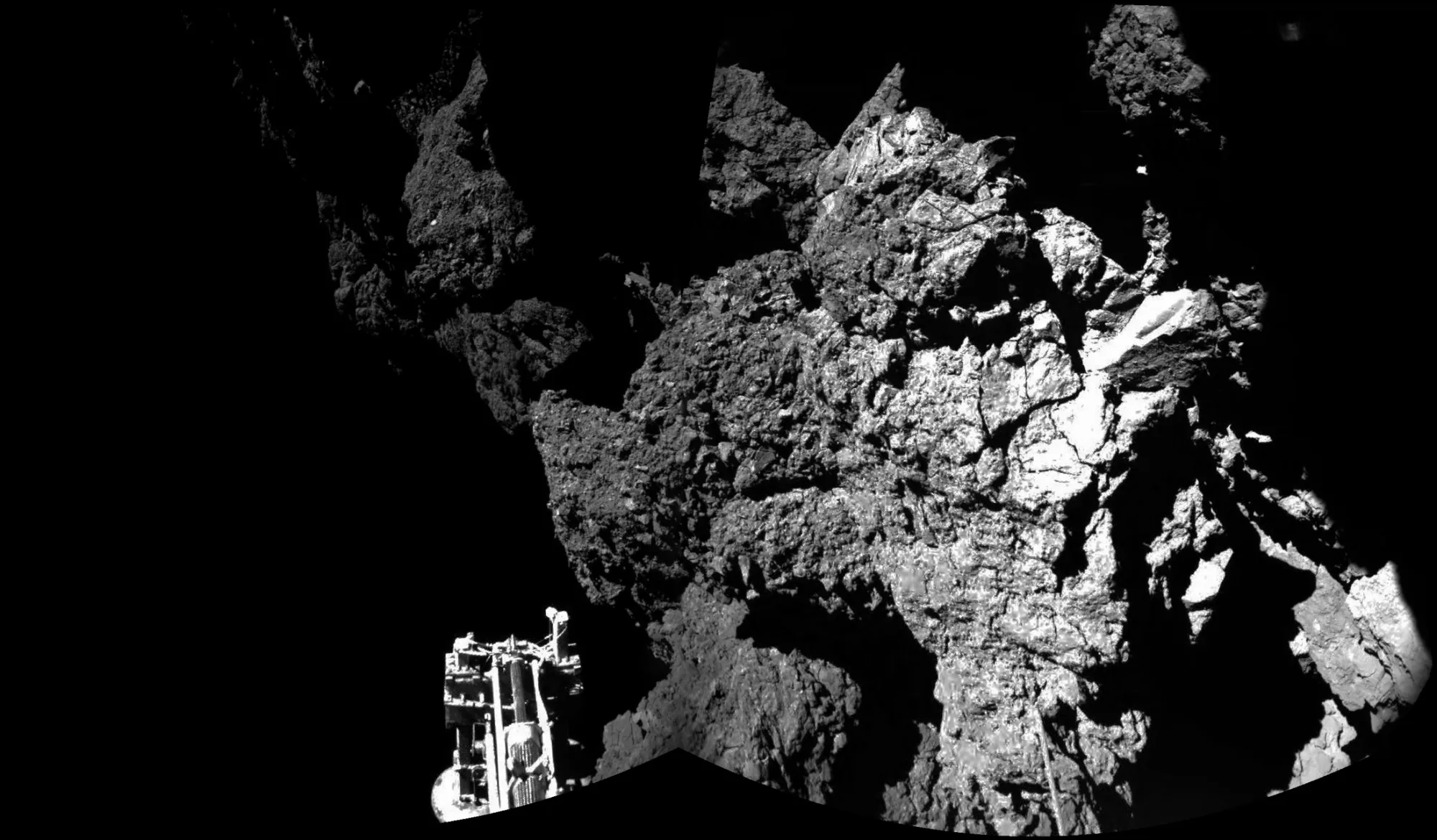
Rosetta was Philae's relay to Earth and on 13 June it received the lander's first return signal after seven months of silence. Philae had bounced into a very poorly illuminated resting place in November the previous year, gone through its initial battery supply and entered hibernation. The return signal lasted 78 seconds and consisted of 343 packets of engineering data (temperatures, power and on-board computer).
There was some April mixed in with that June reply. They'd reconstructed an earlier wake-up from the stored records, whilst the current readings could still be queued up behind the older ones. The brief links would occasionally terminate before the most recent data actually got to Earth, though the June reply did contain some live data.
The team were after something like 50 minutes of sustained communication to get the two onboard data memories of Philae completely emptied and to send instructions to the lander. Of course, shorter contacts could still be of use. That window would have to be within the comet rotation, the sunlight coming to Philae and Rosetta's position relative to Philae. Turning the lander computer on consumed less power than running the receivers and transmitter so it was in principle possible to turn the computer on before there was enough power to communicate.
The orbiter had its own science observations to carry out, some of which would require it to turn away from the nucleus. Its antenna for communicating with Philae could not turn on its own to keep pointing at the lander. On 15 June the teams agreed to change Rosetta's trajectory so that it would be pointing at the nucleus during the communication opportunities and the science programme would be modified to reflect that. The first moves were carried out that week.
Getting Rosetta any closer would have improved the signal (again with the caveat that there were limits to how close you could get as the comet became increasingly active). The dust was in fact being picked up as stars by the star trackers (the instruments that tell you which way the spacecraft is pointing). The spacecraft needed that reference to keep its antenna pointed at Earth. The dust was keeping it at around 200km. Getting any closer would have required monitoring the star trackers while at the same time trying to get a better view of Philae, whose orientation and the terrain around it could have blocked the radio link.
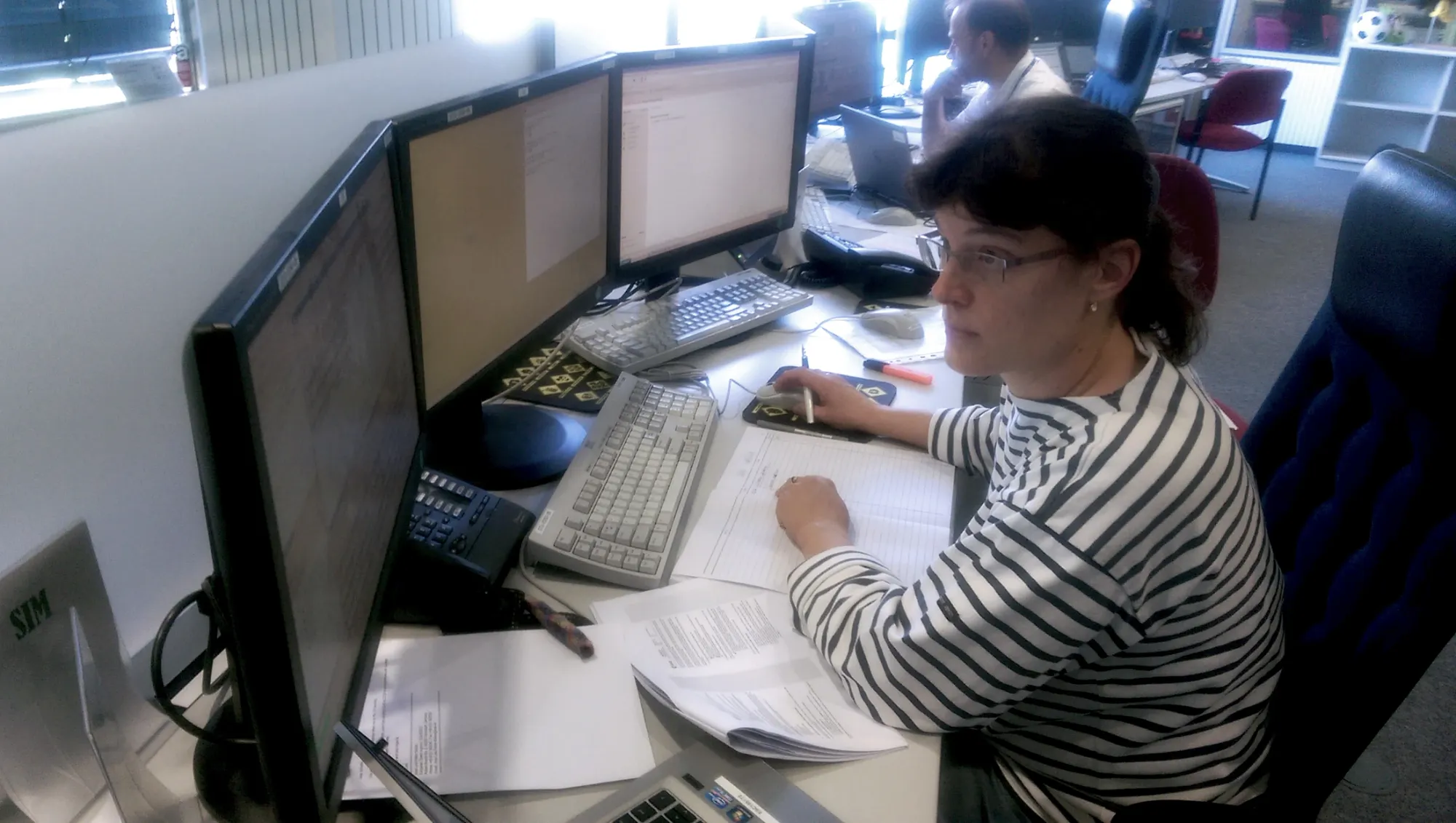
To issue the instruction to start CONSERT the team could use a built-in backup command mode in Rosetta. Normally you'd send the instruction once after a two-way link had been established. In backup mode you'd send a short set of commands out repeatedly every 32 seconds without requiring a reply. A functioning receiver could accept them even if the lander transmitter wasn't able to reply.
That repetition did require a precaution at CONSERT. To start it you had to supply it with power and then pass it a sequence of commands which had to run once in order. The engineers had developed a routine to prevent it being run more than once. The first attempt on 5 July produced no CONSERT response. The second attempt to start CONSERT on 9 July was followed by an ordinary comms link opening up for a 22-minute window (about 12 minutes of that uninterrupted).
The instrument had stayed silent while the normal radio was playing out the day's records of what had happened to it. CONSERT had switched on and then failed to start up after about six minutes, before transmitting. The other receiver had received the command and the computer had duly acted.
The transmitter that was sending the data back had taken about 17 minutes to come back on after being re-selected, as per the subsequent account from Koen Geurts and Cinzia Fantinati (technical and operations managers at DLR for Philae). Normally, whilst Rosetta was calling, 3 minutes without a link would cause the software to switch to the other transmitter. The backup signals had reset the timeout so that was why the longer wait was possible, though the cause of the delay itself remains unknown.
The other transmitter showed no measurable current. They were inclined to think it was a short and the system had tripped into a protective shutdown (though the very brief current spike that would have been indicative of that hadn't been seen). They wanted to keep using the transmitter that had responded and give it more time on its next attempt. Having done the ground model tests, they issued a command to use just that transmitter. The patch would be in temporary memory, so if there was a power loss, it would be lost and the normal configuration would be restored without any further command (it would of course have to be sent again).
For the scientific measurements the backup mode would have restricted them to the sequences already on board (one of which had been saved from November when Philae had landed at an unplanned site and they'd had to resequence the work). They were looking at how to get it to activate so that a number of instruments could go without each one requiring a very detailed set of new commands. If contact was ever re-established, there might well be some new measurements to come back.
By mid-July dust was again messing with the star trackers on Rosetta as it approached as close as 153km and the orbiter pulled back out to 170-190km. The plans for its own science programme were shifting towards the increasingly well illuminated southern hemisphere of the comet, with lander calls to be interleaved with those observations.
The shorter distances available the following year again produced no result. By February 2016 Rosetta was down to around 45km and ESA's view was that the most likely cause of the failure was a problem with Philae's radios, dust on the solar panels and a change in orientation all being possible. The 9 July contact was the last. The data from that contact had been used to build a new configuration but the team were never able to confirm that it had actually arrived in Philae's memory.
Sources
- Koen Geurts and Cinzia Fantinati. Understanding Philae’s wake-up: behind the scenes with the Philae team. ESA, 11 September 2015.
- ESA. Rosetta and Philae: Searching for a good signal. 26 June 2015.
- Daniel Scuka. Preparing Rosetta to listen for lander. ESA, 16 June 2015.
- ESA. Rosetta and Philae in contact again. 19 June 2015.
- DLR. New communication with Philae: commands executed successfully. 10 July 2015.
- ESA. Rosetta and Philae status update. 20 July 2015.
- DLR. Headache for Philae. 20 July 2015.
- Cinzia Fantinati and Koen Geurts. Philae calling …. DLR, 18 September 2015.
- Susan McKenna-Lawlor et al. Performance of the mission critical Electrical Support System (ESS) which handled communications and data transfer between the Rosetta Orbiter and its Lander Philae while en route to and at comet 67P/Churyumov-Gerasimenko. Acta Astronautica 125, 118–136 (2016), §§6.3 and 8.5. Accepted manuscript.
- Stephan Ulamec et al. Rosetta Lander-Philae: Operations on comet 67P/Churyumov-Gerasimenko, Analysis of wake-up activities and final state. IAC 2016 conference manuscript. Manuscript.
- ESA. Rosetta’s lander faces eternal hibernation. 12 February 2016.
- DLR. A slow farewell – Time to say goodbye to Philae. 12 February 2016.